Aisling I

18 July 2016 | Genoa
11 July 2016 | Genoa Italy
04 July 2016 | Genoa
02 July 2016 | Genoa
25 June 2016 | Porto Azzurro Elba
11 April 2016 | Marina di Ragusa
21 March 2016 | Halifax
01 March 2016
14 January 2016
30 September 2015
25 September 2015 | Crotone Italy
18 September 2015 | Erikoussa
10 September 2015 | Preveza
10 September 2015 | Preveza
24 July 2015 | Preveza
20 July 2015 | Varko Bay
13 July 2015 | Vlicho Bay
09 July 2015
03 July 2015 | Preveza Greece
21 June 2015
Hvar!
03 July 2012 | Trogir
Bonnie And Rick
Rick wakes at sunup every day, so the 5 a.m. wake-up call for the journey from Badija to Hvar is no big deal for him. For me, anything that involves getting up before 8 a.m. is an ordeal, but the 6 a.m. departure time allows us to arrive at Hvar by noon and hopefully have our choice of anchorages. We poke our noses into three different spots before finally choosing the cove off the "naturist" beach on the small island of Jerolim. The naturists on this beach aren't the bird-watching kind. It's a bit bizarre to go through the process of setting the anchor while a dozen naked Europeans stand staring at us, zombie-like, from shore. But the anchorage has perfectly clear aquamarine water, Hvar town is just a short dinghy ride across the channel, and our sunset views will be superb. What more could we ask? We jump over the side to check the anchor-it's completely buried and the water feels great.
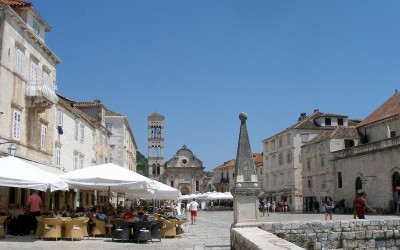
Hvar town is a delightful place. Many of the town's buildings date back to the 16th century, and reflect the architecture of the Venetians who ruled the Dalmatian coast at that time. A huge castle that looms over the town predates the Venetians, having been built during the 13th and 14th centuries. The large renaissance cathedral of St. Stephen sits at the head of the town square, which positively gleams with white limestone. The entire waterfront seems to smell like lavender, which is currently in bloom on the island and is being sold in small sachets by dozens of vendors throughout the town. Here's a boatload just arriving:

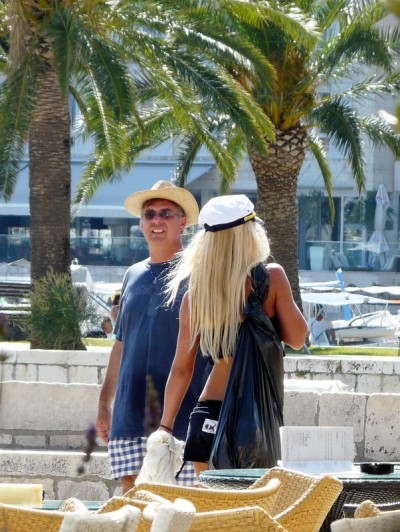
But for us, the best part is sitting in a little café in the square, enjoying a Stella Artois NA (best near-beer yet; can we get this at home?) and watching the people go by. Hvar has a reputation for mega-yachts and glitterati, and the "buzz" reminds us of St. Barth's in the Caribbean. Although we don't identify any celebrities, we do see lots of beautiful people. Without a doubt, the one attracting the most attention is a statuesque young woman with waist-length blond hair, wearing very short shorts, a bikini top and a sailor hat pulled low over her eyes. As she struts through the square, wolf-whistles sound from all directions. Rick dives for his bag, hoping to capture the moment in a photo, but by the time he manages to get his camera out, she is walking out of his life forever.
We visit the cathedral, which has beautiful bronze doors decorated with symbols that reflect life in Hvar. Among the treasures housed inside is a crucifix that supposedly shed tears of blood when a group of plebeians swore an oath to rise up against the aristocrats of the town. (This event occurred on the same day as an earthquake, and threw the citizens into such a state of panic that the planned rebellion was postponed.) But Rick does not want to linger. "This place is depressing" he says. "I'll wait for you in the square". I light a candle for Isabel and leave without finding the miraculous crucifix.
We have not yet had a restaurant meal in Croatia, so Rick suggests that we look for a place that serves traditional Dalmatian food and have an early dinner. We make our way to Konoba Menego, where the owner, Dinko, is carving a huge ham on a table at the threshold.
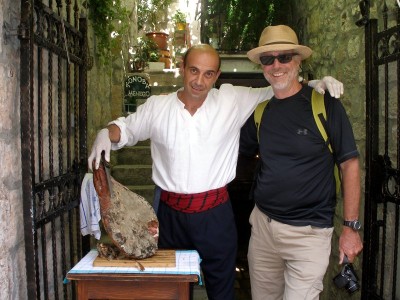
"This restaurant is not like other restaurants" Dinko tells us. "We don't have beer, or Coca Cola, or pizzas and pasta. This is my home, and my wife and I prepare all the food for our guests. If you eat here, you won't be disappointed." He adds "We're in all the guidebooks." He's right about the guidebooks; that's why we're here. We take a seat in the dimly lit dining room, where hams hang on hooks from the ceiling and old family photos and icons decorate the walls. Our waiter tells us that this house has been in Dinko's family for over 500 years. He helps us select a plate of dried ham, Dalmatian cheeses, olives and vegetables, a stuffed green pepper dish, and a focaccia-type bread stuffed with anchovies, capers and cheese. The bread is described as a "For" recipe, and he explains that "For" is the name that the citizens of Hvar call their town. The food is simple and tasty, but the highlight is the lemonade, which we are dreaming of still!
The next day, we set out to see the Benedictine Convent and the Franciscan monastery. At the convent (where the sisters, who do not go outside the convent's walls, make a delicate type of lace) we are disappointed to be told that no visitors will be permitted that day, because they are setting up for a wedding. Based on our short glimpse of the courtyard, the bride and groom will be married in a very beautiful setting! Trudging to the other side of town in the hot sunshine, we find the monastery and pass through the cloisters, where chairs are still set up for a concert that had occurred here the previous evening. The musty-smelling sanctuary is small and intimate, but the monastery's most prized possession is a huge painting of The Last Supper. According to legend, it was painted by an unknown mariner who was abandoned by his shipmates and nursed back to health by the Franciscan monks. A small museum inside the monastery also has an interesting display of amphora and other artifacts from the wreck of a 2nd century AD merchant vessel from Ephesus. The museum's explanatory sign tells us that one in every fifty voyages during this era ended with the loss of the ship.Yikes!
Before leaving the monastery, we spend some time in the shady garden, where the branches of an enormous cypress tree are propped up with wooden supports and lavender and capers bloom beside the wall. When we step back out into the real world, the sight of tourists sunbathing on a small pebbly beach nearby seems almost incongruous. The day certainly is a real scorcher! We decide to pick up a few things at the market and head back to the boat for lunch and a swim. We're on our way to the market when I decide I want to take a closer look at the cathedral.
The man at the door (Boris) tells me that he will be closing the doors for lunch in five minutes, but he lets me in and I ask him to show me the crucifix. He walks with me to an unobtrusive glass-fronted case in a chapel at the front of the church and points out a small, ornate silver cross. "You cannot actually see the cross" he says "It is inside this silver cross to preserve it. We take it out once a year on Feb 6th, for a special service. We have been praying to this cross for over 500 years". A small glass jar beside the cross holds a blood-stained cloth. Whether or not you believe that a crucifix can shed blood, this is a remarkable piece of history. Boris tells me that a young man who was plotting the uprising against the nobles died shortly after the crucifix bled. "A miracle", he says. (Not for the young man, I think.) Boris goes on to tell me that he had been a fisherman and a non-believer for many years. until one day he experienced the presence of the Virgin Mary on his boat. He is clearly a devout man, and he only flinches a little when I admit that I am not a Catholic. But then the topic somehow changes and he begins a tirade about disrespectful tourists who try to enter the cathedral wearing revealing clothing. I know that he's not exaggerating (I'd actually seen a girl walking out the door in a bathing suit the previous afternoon-what was she thinking?) but the whole exchange is getting uncomfortably intense. I am happy to make my escape into the square, where Rick is wondering what on earth I have been up to.
Our last stop is the market, where the produce is fresh but the prices are high. We indulge ourselves and cough up big bucks for a small box of blueberries; the first we have seen since leaving Nova Scotia. They taste just like home.
Just one small thing left to do. The naturists have inspired us. That evening, when the beach is finally deserted, we slip down the ladder and enjoy the freedom of a "suitless" swim, something we have not done in over 20 years. I recall a long-ago magical vacation with our children in Mahone Bay, and a now-lost video of a tiny Katherine swimming beside our old boat Hocus Pocus, calling out "I'm skinny dipping! And my mommy is too!" Can I go back please?
The sunset is spectacular. It's becoming clear that anchorages in Croatia are difficult to leave, but Trogir beckons. That's where we are now, and we're having difficulty leaving this place too!
Cruisers' Notes, Hvar and area:
We first attempt to anchor in Luka Vela Garska. It's a small cove NW of Hvar with depths to 140'. It's deep until you get way inside and the tight quarters make me uncomfortable. This is the second time in 8 years the Spade anchor does not hold and we bring up heavy weed roots. We could have tried again but both decide there has to be a better spot than this. The pilot mentions Otok Jerolim (North side) where we find crystal waters 25' deep over sand, ie. perfect. The naturists are standing and staring when we arrive (see above).The anchor sets first time. It's protected from the south, although the ferry caused a bit of a roll when it went by. You can also anchor in the harbour itself and Med. moor to the east wall north of the ferry stop.
In Hvar town there is a market just off the town square near the Cathedral. Fuel is available in Krizna Luka just east of the island. The dinghy dock, if you can call it that, is in the extreme North of the harbour, on the north-south wall opposite the mini harbour with the water taxis and small boats. It is not protected here and there is lots of wash. Hvar is a very cool town!
Hvar town is a delightful place. Many of the town's buildings date back to the 16th century, and reflect the architecture of the Venetians who ruled the Dalmatian coast at that time. A huge castle that looms over the town predates the Venetians, having been built during the 13th and 14th centuries. The large renaissance cathedral of St. Stephen sits at the head of the town square, which positively gleams with white limestone. The entire waterfront seems to smell like lavender, which is currently in bloom on the island and is being sold in small sachets by dozens of vendors throughout the town. Here's a boatload just arriving:
But for us, the best part is sitting in a little café in the square, enjoying a Stella Artois NA (best near-beer yet; can we get this at home?) and watching the people go by. Hvar has a reputation for mega-yachts and glitterati, and the "buzz" reminds us of St. Barth's in the Caribbean. Although we don't identify any celebrities, we do see lots of beautiful people. Without a doubt, the one attracting the most attention is a statuesque young woman with waist-length blond hair, wearing very short shorts, a bikini top and a sailor hat pulled low over her eyes. As she struts through the square, wolf-whistles sound from all directions. Rick dives for his bag, hoping to capture the moment in a photo, but by the time he manages to get his camera out, she is walking out of his life forever.
We visit the cathedral, which has beautiful bronze doors decorated with symbols that reflect life in Hvar. Among the treasures housed inside is a crucifix that supposedly shed tears of blood when a group of plebeians swore an oath to rise up against the aristocrats of the town. (This event occurred on the same day as an earthquake, and threw the citizens into such a state of panic that the planned rebellion was postponed.) But Rick does not want to linger. "This place is depressing" he says. "I'll wait for you in the square". I light a candle for Isabel and leave without finding the miraculous crucifix.
We have not yet had a restaurant meal in Croatia, so Rick suggests that we look for a place that serves traditional Dalmatian food and have an early dinner. We make our way to Konoba Menego, where the owner, Dinko, is carving a huge ham on a table at the threshold.
"This restaurant is not like other restaurants" Dinko tells us. "We don't have beer, or Coca Cola, or pizzas and pasta. This is my home, and my wife and I prepare all the food for our guests. If you eat here, you won't be disappointed." He adds "We're in all the guidebooks." He's right about the guidebooks; that's why we're here. We take a seat in the dimly lit dining room, where hams hang on hooks from the ceiling and old family photos and icons decorate the walls. Our waiter tells us that this house has been in Dinko's family for over 500 years. He helps us select a plate of dried ham, Dalmatian cheeses, olives and vegetables, a stuffed green pepper dish, and a focaccia-type bread stuffed with anchovies, capers and cheese. The bread is described as a "For" recipe, and he explains that "For" is the name that the citizens of Hvar call their town. The food is simple and tasty, but the highlight is the lemonade, which we are dreaming of still!
The next day, we set out to see the Benedictine Convent and the Franciscan monastery. At the convent (where the sisters, who do not go outside the convent's walls, make a delicate type of lace) we are disappointed to be told that no visitors will be permitted that day, because they are setting up for a wedding. Based on our short glimpse of the courtyard, the bride and groom will be married in a very beautiful setting! Trudging to the other side of town in the hot sunshine, we find the monastery and pass through the cloisters, where chairs are still set up for a concert that had occurred here the previous evening. The musty-smelling sanctuary is small and intimate, but the monastery's most prized possession is a huge painting of The Last Supper. According to legend, it was painted by an unknown mariner who was abandoned by his shipmates and nursed back to health by the Franciscan monks. A small museum inside the monastery also has an interesting display of amphora and other artifacts from the wreck of a 2nd century AD merchant vessel from Ephesus. The museum's explanatory sign tells us that one in every fifty voyages during this era ended with the loss of the ship.Yikes!
Before leaving the monastery, we spend some time in the shady garden, where the branches of an enormous cypress tree are propped up with wooden supports and lavender and capers bloom beside the wall. When we step back out into the real world, the sight of tourists sunbathing on a small pebbly beach nearby seems almost incongruous. The day certainly is a real scorcher! We decide to pick up a few things at the market and head back to the boat for lunch and a swim. We're on our way to the market when I decide I want to take a closer look at the cathedral.
The man at the door (Boris) tells me that he will be closing the doors for lunch in five minutes, but he lets me in and I ask him to show me the crucifix. He walks with me to an unobtrusive glass-fronted case in a chapel at the front of the church and points out a small, ornate silver cross. "You cannot actually see the cross" he says "It is inside this silver cross to preserve it. We take it out once a year on Feb 6th, for a special service. We have been praying to this cross for over 500 years". A small glass jar beside the cross holds a blood-stained cloth. Whether or not you believe that a crucifix can shed blood, this is a remarkable piece of history. Boris tells me that a young man who was plotting the uprising against the nobles died shortly after the crucifix bled. "A miracle", he says. (Not for the young man, I think.) Boris goes on to tell me that he had been a fisherman and a non-believer for many years. until one day he experienced the presence of the Virgin Mary on his boat. He is clearly a devout man, and he only flinches a little when I admit that I am not a Catholic. But then the topic somehow changes and he begins a tirade about disrespectful tourists who try to enter the cathedral wearing revealing clothing. I know that he's not exaggerating (I'd actually seen a girl walking out the door in a bathing suit the previous afternoon-what was she thinking?) but the whole exchange is getting uncomfortably intense. I am happy to make my escape into the square, where Rick is wondering what on earth I have been up to.
Our last stop is the market, where the produce is fresh but the prices are high. We indulge ourselves and cough up big bucks for a small box of blueberries; the first we have seen since leaving Nova Scotia. They taste just like home.
Just one small thing left to do. The naturists have inspired us. That evening, when the beach is finally deserted, we slip down the ladder and enjoy the freedom of a "suitless" swim, something we have not done in over 20 years. I recall a long-ago magical vacation with our children in Mahone Bay, and a now-lost video of a tiny Katherine swimming beside our old boat Hocus Pocus, calling out "I'm skinny dipping! And my mommy is too!" Can I go back please?
The sunset is spectacular. It's becoming clear that anchorages in Croatia are difficult to leave, but Trogir beckons. That's where we are now, and we're having difficulty leaving this place too!
Cruisers' Notes, Hvar and area:
We first attempt to anchor in Luka Vela Garska. It's a small cove NW of Hvar with depths to 140'. It's deep until you get way inside and the tight quarters make me uncomfortable. This is the second time in 8 years the Spade anchor does not hold and we bring up heavy weed roots. We could have tried again but both decide there has to be a better spot than this. The pilot mentions Otok Jerolim (North side) where we find crystal waters 25' deep over sand, ie. perfect. The naturists are standing and staring when we arrive (see above).The anchor sets first time. It's protected from the south, although the ferry caused a bit of a roll when it went by. You can also anchor in the harbour itself and Med. moor to the east wall north of the ferry stop.
In Hvar town there is a market just off the town square near the Cathedral. Fuel is available in Krizna Luka just east of the island. The dinghy dock, if you can call it that, is in the extreme North of the harbour, on the north-south wall opposite the mini harbour with the water taxis and small boats. It is not protected here and there is lots of wash. Hvar is a very cool town!
Comments

| Vessel Name: | Aisling I |
| Vessel Make/Model: | Slocum 43 |
| Hailing Port: | Halifax, NS, Canada |
| Crew: | Rick and Bonnie Salsman |
| About: | |
| Extra: | |
| Social: |
|
Aisling I's Photos - Aisling I (Main)
Photos 1 to 7 of 7 |
1 |
 |
 |
 |
 |
 |
 |
 |
1 |
 |
 |
 |
 |
 |
 |
 |
 |
 |
 |
 |
 |
 |
 |
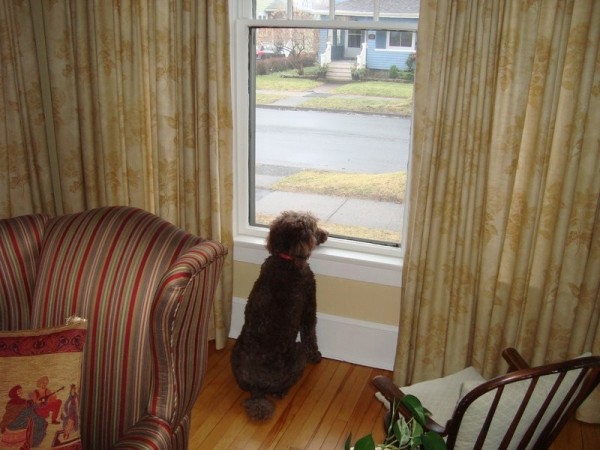 |
During the winter, we babysat Murphy Brown (a lovely poodle that belongs to our friends Wally and Martha) for 10 days. I had some fun capturing her in some of her favourite spots!
8 Photos
Created 16 May 2012
|
 |
 |
 |
 |
 |
 |
 |
 |
 |
 |
Pics of Aisling at anchor, up top and down below.
23 Photos
Created 2 November 2008
|
 |
 |
 |
 |
 |
 |
 |
 |
 |
 |
 |
 |
 |
 |
 |
 |
 |
 |
 |
 |
 |
 |
 |
 |
 |
 |
 |
 |
 |
 |
 |
 |
 |
 |
About Aisling 1
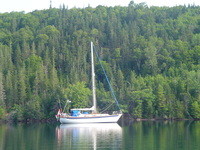
Who: Rick and Bonnie Salsman
Port: Halifax, NS, Canada
Quick Links
- Miscellaneous
- Greece-other
- Croatia and Montenegro 2012
- Sicily 2011-2014
- Italy (Mainland) 2012
- Weather and Technical
- Turkey
- Greece-Aegean
- Syracuse 2009
- Tunisia
- Malta
- Greece Ionian & Gulf of Corinth
- Sicily 2008
- Corsica and Sardinia
- Southern France
- Transatlantic part 2-Azores to Baiona
- Azores 2007
- South Spain & Balearics-2008
- South Spain & Gibraltar 2007
- Portugal 2007
- Atlantic Spain
- Transatlantic part 1-Halifax to Azores
- Previous Trips
- pre departure
- Show All Posts
SailBlogs Friends