s/v Ceili
"You live with a ship a few years and cuss her enough and all of a sudden one day you wake up and discover you're in love." ----Ernest K. Gann, CMA 1930 and Author of "Twilight For The Gods" and Captain of the brigantine ALBATROS
13 May 2012
09 April 2012
02 April 2012
26 March 2012
18 March 2012 | Vero Beach
12 March 2012 | Green Turtle Cay, Abacos, Bahamas
20 February 2012 | Sea of Abaco
20 February 2012
15 February 2012
03 February 2012 | Marsh Harbour
01 January 2012 | Marsh Harbour, Abacos
24 December 2011
23 December 2011
22 December 2011
22 December 2011
18 December 2011
17 December 2011
17 December 2011
13 December 2011
08 December 2011 | West End, Bahamas
Exploring The Abacos
03 February 2012 | Marsh Harbour
Linda
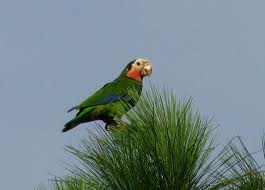
Endangered Bahamas Parrot
It's been quite a while since we've posted an update and that's mostly due to the fact that we've been docked in Marsh Harbor for the past several weeks. We are staying at the Mangoes Marina and it's been very enjoyable. Mangoes is one of three or four marinas in Marsh Harbor and, as it's on the west side of the harbor, it's very convenient to shopping of all kinds. There are several grocery stores, including Maxwell's, a true supermarket, two marine stores, two hardware stores, bakeries, gift shops, at least two dive shops and four or five liquor stores. We've been able to get just about everything we need here, including a "lookie bucket", an item very useful here...but something we've never seen at home. The ferry to Guana Cay ties up at the next dock...an easy way to get to Nippers for the Sunday pig roast and the ferry docks to the other cays are only a short distance from here.
After all the 'get up and go' of our early trip, it's been nice to be in one place for a while. We pulled the bikes out of the 'garage' (aka the aft stateroom) and have put a quite a few miles on them. We've found a number of restaurants that we enjoy and a big surprise was Matilda's...a small take out place which served one of the best burgers I've ever had. We've really enjoyed the Wednesday 'rib night' at the Jib Room across the harbor, at the Marsh Harbor Marina, and have been several times. We've also met lots of very nice people here in Marsh Harbor. On Saturday nights, our full-time, live-aboard neighbors, Mars and Melanie, organize 'movie night' which is always fun and interesting. We've been snorkeling at Mermaid Reef, just around the corner from the harbor entrance. So, all in all, we've had lots to keep us busy and entertained here in Marsh Harbor.
On the 15th of January, we hopped in the dinghy, all set to cross the harbor and visit with our friends Gail and Hans on Badjaw. The only problem was that engine wouldn't start. After trying all the suggested trouble-shooting fixes, it became clear that a professional was required. On the recommendation of Hans, we contacted James at the Abaco Suzuki shop. Mars and Melanie graciously offered us the use of their Boston Whaler to tow our dink to the new public dinghy dock, where we took our engine off and brought it to the shop, just across the street. In the 45 or so minutes it took us tow our dinghy back, return the Whaler and walk back to the Suzuki shop, James had our engine apart and diagnosed: the ignition coil had failed and it needed to be replaced. While we waited for the part to arrive from the states, James was kind enough to loan us a small, 2 hp, outboard for use while our engine was in the shop which was wonderful as we had plans to head off for a bit. We now have our engine back and it's running like a top.
During the week of Jan. 16 - 22, we left Marsh Harbor and returned to Hope Town and Great Guana. While in Hope Town we did some of the things we hadn't been able to do on earlier visits. We climbed the light house and took the obligatory picture of Ceili in the harbor and we rented a golf cart and drove out to Tahiti Beach, a very beautiful spot. On our way there, near the Abaco Inn, we passed earth movers pushing sand up from the beach in an attempt to shore up the road, damaged in a recent storm. The road at that point is a little scary as it's narrow and there's quite a drop off, with only wooden pallets strung out along the edge
Yesterday, we rented a van with our friends Gail, Hans, Jane and Peter and drove down to Abaco National Park hoping to catch a glimpse of the Abaco parrot (A. leucocephala bahamensis). The Bahama Amazon once lived in Abaco, New Providence, San Salvador, Long Island, Crooked Island, Acklins and Great Inagua but today are rare and only found in Abaco and Great Inagua. Because they build their nests in the ground, the birds are vulnerable to predation by feral cats and dogs, snakes, crabs and other animals and heavy rains can flood the nests,drowning the birds. Habitat loss and capture for pets and for sale have also been a large factors in the decline of their population. Since 1952, these beautiful birds have been protected by the By the Wild Bird Protection Act and, in 1994, the Bahamian government set aside 20,000 acres in South Abaco to create Abaco National Park to help preserve the Bahama Amazon. Their primary habitat is in the Abaco National Park which is in Abaco's south east quarter and along the unpaved road to Abaco's other Lighthouse at Hole in the Wall. We were thrilled to see at least 8 of them snoozing in a palm tree.
In Cherokee Sound, we met some conch fishermen waiting for the mail boat from Nassau to arrive. Their catch of conch was sitting was sitting on the dock in a big pile; shells pierced and tied together by nylon rope. We learned that conch can live 2 days out of water as long as they are drenched in salt water periodically. A rain storm would kill them all quickly.
On the way home we grabbed dinner at Pete's Pub in Little Harbor.
All in all, this has been a lovely few weeks!
Another Album has been added "Hopertown and Great Guana"
It's been quite a while since we've posted an update and that's mostly due to the fact that we've been docked in Marsh Harbor for the past several weeks. We are staying at the Mangoes Marina and it's been very enjoyable. Mangoes is one of three or four marinas in Marsh Harbor and, as it's on the west side of the harbor, it's very convenient to shopping of all kinds. There are several grocery stores, including Maxwell's, a true supermarket, two marine stores, two hardware stores, bakeries, gift shops, at least two dive shops and four or five liquor stores. We've been able to get just about everything we need here, including a "lookie bucket", an item very useful here...but something we've never seen at home. The ferry to Guana Cay ties up at the next dock...an easy way to get to Nippers for the Sunday pig roast and the ferry docks to the other cays are only a short distance from here.
After all the 'get up and go' of our early trip, it's been nice to be in one place for a while. We pulled the bikes out of the 'garage' (aka the aft stateroom) and have put a quite a few miles on them. We've found a number of restaurants that we enjoy and a big surprise was Matilda's...a small take out place which served one of the best burgers I've ever had. We've really enjoyed the Wednesday 'rib night' at the Jib Room across the harbor, at the Marsh Harbor Marina, and have been several times. We've also met lots of very nice people here in Marsh Harbor. On Saturday nights, our full-time, live-aboard neighbors, Mars and Melanie, organize 'movie night' which is always fun and interesting. We've been snorkeling at Mermaid Reef, just around the corner from the harbor entrance. So, all in all, we've had lots to keep us busy and entertained here in Marsh Harbor.
On the 15th of January, we hopped in the dinghy, all set to cross the harbor and visit with our friends Gail and Hans on Badjaw. The only problem was that engine wouldn't start. After trying all the suggested trouble-shooting fixes, it became clear that a professional was required. On the recommendation of Hans, we contacted James at the Abaco Suzuki shop. Mars and Melanie graciously offered us the use of their Boston Whaler to tow our dink to the new public dinghy dock, where we took our engine off and brought it to the shop, just across the street. In the 45 or so minutes it took us tow our dinghy back, return the Whaler and walk back to the Suzuki shop, James had our engine apart and diagnosed: the ignition coil had failed and it needed to be replaced. While we waited for the part to arrive from the states, James was kind enough to loan us a small, 2 hp, outboard for use while our engine was in the shop which was wonderful as we had plans to head off for a bit. We now have our engine back and it's running like a top.
During the week of Jan. 16 - 22, we left Marsh Harbor and returned to Hope Town and Great Guana. While in Hope Town we did some of the things we hadn't been able to do on earlier visits. We climbed the light house and took the obligatory picture of Ceili in the harbor and we rented a golf cart and drove out to Tahiti Beach, a very beautiful spot. On our way there, near the Abaco Inn, we passed earth movers pushing sand up from the beach in an attempt to shore up the road, damaged in a recent storm. The road at that point is a little scary as it's narrow and there's quite a drop off, with only wooden pallets strung out along the edge
Yesterday, we rented a van with our friends Gail, Hans, Jane and Peter and drove down to Abaco National Park hoping to catch a glimpse of the Abaco parrot (A. leucocephala bahamensis). The Bahama Amazon once lived in Abaco, New Providence, San Salvador, Long Island, Crooked Island, Acklins and Great Inagua but today are rare and only found in Abaco and Great Inagua. Because they build their nests in the ground, the birds are vulnerable to predation by feral cats and dogs, snakes, crabs and other animals and heavy rains can flood the nests,drowning the birds. Habitat loss and capture for pets and for sale have also been a large factors in the decline of their population. Since 1952, these beautiful birds have been protected by the By the Wild Bird Protection Act and, in 1994, the Bahamian government set aside 20,000 acres in South Abaco to create Abaco National Park to help preserve the Bahama Amazon. Their primary habitat is in the Abaco National Park which is in Abaco's south east quarter and along the unpaved road to Abaco's other Lighthouse at Hole in the Wall. We were thrilled to see at least 8 of them snoozing in a palm tree.
In Cherokee Sound, we met some conch fishermen waiting for the mail boat from Nassau to arrive. Their catch of conch was sitting was sitting on the dock in a big pile; shells pierced and tied together by nylon rope. We learned that conch can live 2 days out of water as long as they are drenched in salt water periodically. A rain storm would kill them all quickly.
On the way home we grabbed dinner at Pete's Pub in Little Harbor.
All in all, this has been a lovely few weeks!
Another Album has been added "Hopertown and Great Guana"
Comments
| Vessel Name: | CEILI |
| Vessel Make/Model: | Island Packet 40 (hull #50) |
| Hailing Port: | Providence, RI |
| Crew: | Bill and Linda Daley |
| About: | Currently sailing the coast of New England in anticipation of heading South someday. Ceili is currently moored in East Greenwich, R.I. We have been sailing for awhile now, and are both USCG licensed captains (hence, no crew!) |
| Extra: | "Ceili" (kay'- lee) is gaelic for "joyful celebration." It reflects our Irish roots. |
Gallery not available
s/v CEILI
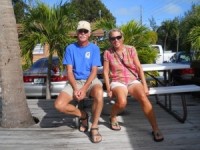
Who: Bill and Linda Daley
Port: Providence, RI
Table of Contents
Interesting Links
- Bahamian Chicken Souse
- Aldrich Mansion
- Amokura
- AtLantic Highlands Harbor
- Baltimore Promenade
- Block Island
- C and D Canal
- Capt. Billy Joel Designer Man
- CEILI on YouTube
- Coecles Harbor Marina
- Concordia Yawls/Padanaram
- Coronet/IYRS
- Current NY weather RADAR
- Current Wind Observations
- Cuttyhunk
- Cuttyhunk Fishing Club Slide Show
- Dark 'n Stormy Redux
- Dunkirk's Heroes Return
- Dutch Harbor
- Father's Day Rescue
- Fishers Island
- GAM Single Sideband Antenna
- Glebe Creek Screenworks
- Goslings Rum
- Greatland Laser Flare
- Island Packet 40 Specs
- Island Packet Photos
- Island Packet Yachts
- Katama Breach
- Lopolight
- Maine harbors
- Marine Traffic/AIS
- Masquerade Sailblog
- McMurdo FastFind PLB
- Montauk
- National Hurricane Center
- New Bedford YC/Padanaram
- Newport
- Ocean Marine Systems
- OUR BOAT PROJECTS
- Pangaea Expedition
- Queens's Wave
- Rapid Diver
- S/V ONWARD
- Safety at Sea Seminar
- Scott Boomlock
- Seven Drowned in Tarpaulin Cove
- Shelter Island
- Sleighride
- Star Island Marina-Montauk
- Stonington,CT
- Sydney Boats Ablaze
- THE BEST Ginger Beer
- The Greatest Great White
- WebCam: Edgartown Marine
- WebCam:Block Island
- WebCam:Cape Cod Canal
- WebCam:Hyannis Harbor
- WebCam:Newport
- YANMAR Help!!!