Chasse Spleen
The Besson-Mackain Family Blog
03 January 2011
02 November 2010
01 June 2010
02 September 2009
30 June 2009
01 May 2009
01 April 2009
30 November 2008
01 November 2008
30 October 2008
15 October 2008
21 September 2008
20 September 2008
22 July 2008
04 July 2008
04 July 2008
10 March 2008
06 December 2007
10 November 2007
Solomon Islands - exploring new places
03 January 2011
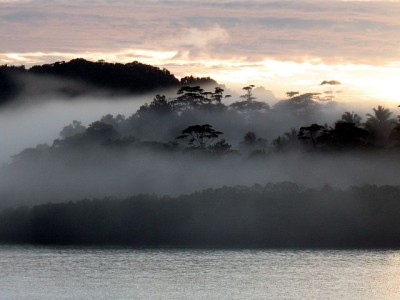
As we arrive in the Solomon Islands, we decide to stop in Utupua in the Santa Cruz Islands. It is a beautiful place with a very protected anchorage surrounded by one of the last kaori forest. The villagers have always refused to have any logging on their island and have hence preserved their trees. It is absolutely stunning. One of the activities an anchorage is crocodile spotting: they often reveal themselves as a big log travelling across the bay but against the current! It is a bad idea to go and check your anchor. A Swiss yachty unfortunately was snapped few years ago.
The villages at the entrance of the lagoon are very pretty and we felt extremely welcomed by the inhabitants. We could only stay for a few days which was unfortunate as there are plenty of activities to do there with the locals. This is one of the few places in the Solomon Islands where we still found very strong traditions and powerful local chiefs. The population is a mixed of Polynesian and Melanesian origins and one feels it in the way they freely come and speak to us as well ensure we do not leave the village empty handed on our first visit. We receive a nice collection of pumpkins to feed the family for a while. We will try to return in the future as we strongly feel we missed something.
As we arrive in Lata, we are welcomed by our friends Margaret and Titus who seem thrilled to see us. They do remember the boat and especially the boys. We will cause a huge disappointment as we need to leave after one day, Margaret was already planning to prepare a feast with coconut crab for our dinner.
We continue our journey stopping in known places, in Marau Sound, Honiara (which looks and feels far worse than two years ago), Russel Islands and Western Province. In every place we visited two years ago, the kids remember our pirates' name and our two boys feel like heros!
After a few days in Peava where we are greeted by our old friends, Kelsy and Caroline, Eva and Lily we decide to head to new grounds.
M'Bili is just a few nautical miles away and is the beginning of the Marovo Lagoon. It is a safe place for most weather conditions and the water there is amazingly clear. We have a turquoise pool just a few minutes from the boat. This is an ideal place for swimming and a good playground for the boys. We organise a carving show to avoid the permanent visits of carvers to our boat and the few relations we have with the villagers are very friendly. The bad surprise for Marc is the serious decrease in the number of fish and sharks where he used to go spear fishing. We hear reports of shark fining in the area and clearly it shows.
After dropping our crew, Maxime, in Noro (he is heading to New Zealand for new adventures), we head to Ringgi Cove which used to be the local harbour for logging. The place is now beautiful as they have replanted teak tree all over the hills. There are plenty of rivers to visit with the dinghy and the locals are charming offering more fruits, vegetables and flowers than we can eat. We decide to spend Christmas there and enjoy watching the surprise of the villagers' faces as they discover our Christmas flashing lights. The easy access to the small islets of the Vona Vona lagoon makes this anchorage an ideal spot. There are also plenty of kingfish on the reef just outside of the cove (a dream fish for sashimi lovers).
The next step is Ghizo. We fill up the boat with items to trade in perspective of our next destination : the remote island of Isabela.
The villages at the entrance of the lagoon are very pretty and we felt extremely welcomed by the inhabitants. We could only stay for a few days which was unfortunate as there are plenty of activities to do there with the locals. This is one of the few places in the Solomon Islands where we still found very strong traditions and powerful local chiefs. The population is a mixed of Polynesian and Melanesian origins and one feels it in the way they freely come and speak to us as well ensure we do not leave the village empty handed on our first visit. We receive a nice collection of pumpkins to feed the family for a while. We will try to return in the future as we strongly feel we missed something.
As we arrive in Lata, we are welcomed by our friends Margaret and Titus who seem thrilled to see us. They do remember the boat and especially the boys. We will cause a huge disappointment as we need to leave after one day, Margaret was already planning to prepare a feast with coconut crab for our dinner.
We continue our journey stopping in known places, in Marau Sound, Honiara (which looks and feels far worse than two years ago), Russel Islands and Western Province. In every place we visited two years ago, the kids remember our pirates' name and our two boys feel like heros!
After a few days in Peava where we are greeted by our old friends, Kelsy and Caroline, Eva and Lily we decide to head to new grounds.
M'Bili is just a few nautical miles away and is the beginning of the Marovo Lagoon. It is a safe place for most weather conditions and the water there is amazingly clear. We have a turquoise pool just a few minutes from the boat. This is an ideal place for swimming and a good playground for the boys. We organise a carving show to avoid the permanent visits of carvers to our boat and the few relations we have with the villagers are very friendly. The bad surprise for Marc is the serious decrease in the number of fish and sharks where he used to go spear fishing. We hear reports of shark fining in the area and clearly it shows.
After dropping our crew, Maxime, in Noro (he is heading to New Zealand for new adventures), we head to Ringgi Cove which used to be the local harbour for logging. The place is now beautiful as they have replanted teak tree all over the hills. There are plenty of rivers to visit with the dinghy and the locals are charming offering more fruits, vegetables and flowers than we can eat. We decide to spend Christmas there and enjoy watching the surprise of the villagers' faces as they discover our Christmas flashing lights. The easy access to the small islets of the Vona Vona lagoon makes this anchorage an ideal spot. There are also plenty of kingfish on the reef just outside of the cove (a dream fish for sashimi lovers).
The next step is Ghizo. We fill up the boat with items to trade in perspective of our next destination : the remote island of Isabela.
Vanuatu - a longer stay in Efate
02 November 2010
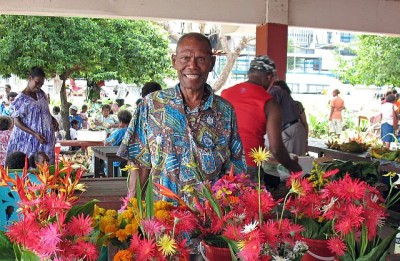
Unlike two years ago where we visited many islands from Tana (South) to Torres (North), we decide to spend most of our time in Efate. During our two months we will have plenty of opportunities to meet expats, many locals including Michel and his Mum who are French nationals having established in Vanuatu long before the Independence (1980).
We had ample time to discover the island with some of its delightful spots by the sea.
Although we did not see too much changes in Port Vila centre, there is little doubt that the economy has boomed over the last two years. The number of cars has increased dramaticaly with even small traffic jams at peak time! Port Vila is an interesting place where various communities cohabit well communicating in all three languages ie Bislama, English and French.
Our social life is becoming very busy both with fellow yachties and our local friends : Time for us to head North to Solomon Islands. We make a few stops on the way, Lamen Bay, Waterfall Bay and the Torres but we have little time to spend there with the cyclone season approaching.
We had ample time to discover the island with some of its delightful spots by the sea.
Although we did not see too much changes in Port Vila centre, there is little doubt that the economy has boomed over the last two years. The number of cars has increased dramaticaly with even small traffic jams at peak time! Port Vila is an interesting place where various communities cohabit well communicating in all three languages ie Bislama, English and French.
Our social life is becoming very busy both with fellow yachties and our local friends : Time for us to head North to Solomon Islands. We make a few stops on the way, Lamen Bay, Waterfall Bay and the Torres but we have little time to spend there with the cyclone season approaching.
New Caledonia - Noumea, Ile des Pins and Loyalty Islands
31 July 2010
The crossing from Cairns to New Caledonia is proving as tedious as expected. We first have to motorsail down the East Coast from Cairns to McKay where we make a technical stop with one of our two generators producing a exotic 30 volts voltage. Although we just stay an overnight we are impressed by the services provided by the marina and various specialists. Unfortunately the weather is against us and we have to stop again for a few days further South. We are desperately seeking for the right window to cross to Noumea where Marc's parents have been waiting for us. It will not come and we will venture at sea with headwinds between 20 and 30 knots, 3/4 meters waves. The only entertainment during the crossing is the amazing somersaults of two minke whales about 200 meters from the boat. We arrived shattered and are greeted by Grandparents relieved to see us and thrilled to spend time with their grandchildren.
Chasse Spleen and the crew need to recover for a few days before heading to the Ile des Pins for a week with Marc's father onboard.
We first head to the Baie de Prony. We drop the anchor in the furthest place in the baie, extremely well protected in all wind directions. Rivers and waterfalls are easily accessible in dinghy and there are even a warm water stream and hotbath. Hoping to see humpback whales which have "officially" arrived in New Caledonia, we are exploring every part of the baie of Prony but yet again with no luck.
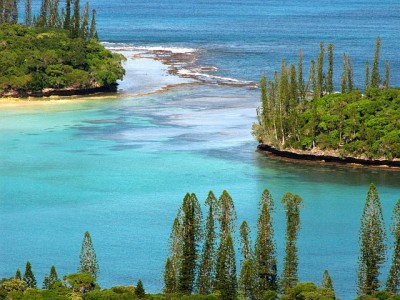
Ile des Pins is the highlight of our cruising in New Caledonia. We have seen many exotics white sand/coconuts beaches during our travels but Iles des Pins is a dramatic and unique landscape in the South Pacific.
Ilot Brosse with its combination of beautiful shades of blue, amazing beach densely covered with pine trees is a delight for the eyes. We are the only boat at the anchorage and have the beach to ourselves: barbecue, swimming, spotting sea snakes "tricots rayes" are all on the programme.
After a few days we head for the Baie of Kuto. The anchorage is nice, with a pretty walk on land and welcoming locals. The beach provides a very good spot for a nap under the shade of big trees with a breeze coming from either side of the peninsula. The hotel onshore also provides a nice spot for sundowners. Unfortunately we need to head back to Noumea as Marc's parents need to catch their plane back to Europe. We were glad to finally have the opportunity to share with Claude a bit of the yachties' life at its best.
We will extend our stay in Port Moselle as we wait for new passports for the boys. We are happily surprised by the Haut Commissariat for their flexibility since our case is not very common (French nationals with a UK residency).
We are fortunate to meet Bora's crew again; this gives us a great opportunity to share memories of the good 'old' days in the Marquesas islands.
Our extended stay leaves us time to finalise a food provisioning with all the French delicacies that we could miss later (baguettes, croissants, smelly cheeses, saucissons, jambon de pays, Merguez and chipolatas sausages, cornichons, Dijon mustard etc).
As we head towards Vanuatu we decide to spend a few days in the Loyalty islands which we bypassed two years ago. It is interesting to get an exposure to the nest of Kanak insurection at a time where relations between Caldoches (French white established in New Caledonia for generations) and kanak communities at relatively tense with the rising uncertainties linked to a potential 2014 independence. The recent decision of raising both flags (tricolore and kanak flags) on administrative buildings caused a bit of emotion on both sides.
Upon our arrival in Lifou, Marc goes onshore to "do the coutume" with the local chef. One should officially introduce himself to the big man offering a 'manou' (a piece of fabric), some cigarettes (or other goodies) and some money (especially appreciated!) as a token of friendship. He is welcomed by the uncle of the chief (as the chief is currently working in the mines on the mainland) with a pro-independance speach. Being open minded Marc even suggests that he would be very happy to raise a kanak courtesy flag on Chasse Spleen if he could find one.
The anchorage in Jonkin Bay is beautiful, a huge cliff falls directly into the sea and there is a very scenic spot for swimming in crystal clear water under the trees. The view from the guest house is stunning and we see whales blowing a few nautical miles off shore.
Lifou is also a big producer of vanilla pods in the region, so I decide to venture with the boys and Maxime to the local vanilla plantation. On our way we are picked up by a charming couple taking us to their place where they cultivate their vanilla. We are fortunate to get an explanation of the whole process in their back garden. We head back to the boat with enough vanilla for a year of cooking as they kindly offer handfuls of vanilla pods. A delicacy for our future rice puddings and Tahitian 'poisson cru" salad.
As we wake up in the middle of the night to head to Ouvea we are surrounded by deep loud breathing noises and flapping in the water. These have to be whales! This is unfortunately a pitch dark night and there is no way to see them. As we finally decide to use a spotlight, they all vanish! Very frustrating!
Ouvea is a huge atoll with white sand beach and coconut trees for miles on end: a beautiful postcard. As we reach the shore, Marc does his "coutume' duty again and is officially welcomed and under the community proctection.
On Sunday as everyone leisurely sits in the shade, he will be invited to join petanque games by the locals.
The weather is not great but we find one day to venture with the dinghy to the South Pleiades (small islands, South West of the lagoon). They are gorgeous, very wild and offer good snorkelling and potential diving. Unfortunately we will not be able to come back and need to leave Ouvea fairly quickly as weather forecasts are worsening. We do not even have a chance to say a formal "tata" (good bye) to the villagers.
Chasse Spleen and the crew need to recover for a few days before heading to the Ile des Pins for a week with Marc's father onboard.
We first head to the Baie de Prony. We drop the anchor in the furthest place in the baie, extremely well protected in all wind directions. Rivers and waterfalls are easily accessible in dinghy and there are even a warm water stream and hotbath. Hoping to see humpback whales which have "officially" arrived in New Caledonia, we are exploring every part of the baie of Prony but yet again with no luck.
Ile des Pins is the highlight of our cruising in New Caledonia. We have seen many exotics white sand/coconuts beaches during our travels but Iles des Pins is a dramatic and unique landscape in the South Pacific.
Ilot Brosse with its combination of beautiful shades of blue, amazing beach densely covered with pine trees is a delight for the eyes. We are the only boat at the anchorage and have the beach to ourselves: barbecue, swimming, spotting sea snakes "tricots rayes" are all on the programme.
After a few days we head for the Baie of Kuto. The anchorage is nice, with a pretty walk on land and welcoming locals. The beach provides a very good spot for a nap under the shade of big trees with a breeze coming from either side of the peninsula. The hotel onshore also provides a nice spot for sundowners. Unfortunately we need to head back to Noumea as Marc's parents need to catch their plane back to Europe. We were glad to finally have the opportunity to share with Claude a bit of the yachties' life at its best.
We will extend our stay in Port Moselle as we wait for new passports for the boys. We are happily surprised by the Haut Commissariat for their flexibility since our case is not very common (French nationals with a UK residency).
We are fortunate to meet Bora's crew again; this gives us a great opportunity to share memories of the good 'old' days in the Marquesas islands.
Our extended stay leaves us time to finalise a food provisioning with all the French delicacies that we could miss later (baguettes, croissants, smelly cheeses, saucissons, jambon de pays, Merguez and chipolatas sausages, cornichons, Dijon mustard etc).
As we head towards Vanuatu we decide to spend a few days in the Loyalty islands which we bypassed two years ago. It is interesting to get an exposure to the nest of Kanak insurection at a time where relations between Caldoches (French white established in New Caledonia for generations) and kanak communities at relatively tense with the rising uncertainties linked to a potential 2014 independence. The recent decision of raising both flags (tricolore and kanak flags) on administrative buildings caused a bit of emotion on both sides.
Upon our arrival in Lifou, Marc goes onshore to "do the coutume" with the local chef. One should officially introduce himself to the big man offering a 'manou' (a piece of fabric), some cigarettes (or other goodies) and some money (especially appreciated!) as a token of friendship. He is welcomed by the uncle of the chief (as the chief is currently working in the mines on the mainland) with a pro-independance speach. Being open minded Marc even suggests that he would be very happy to raise a kanak courtesy flag on Chasse Spleen if he could find one.
The anchorage in Jonkin Bay is beautiful, a huge cliff falls directly into the sea and there is a very scenic spot for swimming in crystal clear water under the trees. The view from the guest house is stunning and we see whales blowing a few nautical miles off shore.
Lifou is also a big producer of vanilla pods in the region, so I decide to venture with the boys and Maxime to the local vanilla plantation. On our way we are picked up by a charming couple taking us to their place where they cultivate their vanilla. We are fortunate to get an explanation of the whole process in their back garden. We head back to the boat with enough vanilla for a year of cooking as they kindly offer handfuls of vanilla pods. A delicacy for our future rice puddings and Tahitian 'poisson cru" salad.
As we wake up in the middle of the night to head to Ouvea we are surrounded by deep loud breathing noises and flapping in the water. These have to be whales! This is unfortunately a pitch dark night and there is no way to see them. As we finally decide to use a spotlight, they all vanish! Very frustrating!
Ouvea is a huge atoll with white sand beach and coconut trees for miles on end: a beautiful postcard. As we reach the shore, Marc does his "coutume' duty again and is officially welcomed and under the community proctection.
On Sunday as everyone leisurely sits in the shade, he will be invited to join petanque games by the locals.
The weather is not great but we find one day to venture with the dinghy to the South Pleiades (small islands, South West of the lagoon). They are gorgeous, very wild and offer good snorkelling and potential diving. Unfortunately we will not be able to come back and need to leave Ouvea fairly quickly as weather forecasts are worsening. We do not even have a chance to say a formal "tata" (good bye) to the villagers.
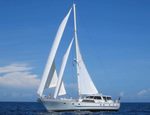
| Vessel Name: | Chasse Spleen |
| Vessel Make/Model: | 71' Salthouse Motorsailer (NZ) |
| Hailing Port: | Kingstown - St Vincent & Grenadines |
| Crew: | The Besson-Mackain |
| About: | MARC : Skipper, Papa, Mr Grumpy. CONSTANCE : Head crew - Mummy, Cook, Head Teacher, Hostess. ALEXIS & NICOLAS : Midships - 9 and 7 years old - The "Pirates". |
| Extra: | Steel & aluminium, 4 doubles. 250 HP + 2 X 16 Kwa. 30hp 12' dinghy. 3 diving equipments, compressor. |
Gallery not available
Chasse Spleen
Who: The Besson-Mackain
Port: Kingstown - St Vincent & Grenadines