Sailing Leander
Sailing Leander
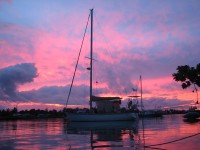
Who: Sima Baran & Paul Robertson
Port: Boston
Favorites
22 November 2010 | Fethiye, Turkey
22 October 2010
20 July 2010 | Endeavor Bay, Tawila Island, Egypt
17 July 2010 | Red Sea, Egypt
15 July 2010 | 27 41 N, 33 48 E
14 June 2010 | 14 48 N, 42 57 E
12 June 2010
08 June 2010 | Sataya (Dolphin) Reef, Red Sea, off the coast of Egypt
07 June 2010 | Dangerous Reef, Foul Bay, Egypt
02 June 2010 | Khor el Morob, Sudan
30 May 2010 | Marsa Shin'Ab, Sudan
27 May 2010 | Marsa Shin'ab, Sudan
25 May 2010 | Suakin, Sudan
24 May 2010 | Aden, Yemen
03 May 2010 | Day 5: 160 miles northeast of Aden, 15 miles from the Yemeni Coast
29 April 2010 | Day 1: Passage to Yemen
24 April 2010 | Day 16: 135 Miles From Salalah, Oman
21 April 2010 | Day 13: 460 Miles From Salalah, Oman
19 April 2010 | Day 11: A Little Bit Closer to Oman
18 April 2010 | In the midst of the Arabian Sea
Finike to Fethiye
22 November 2010 | Fethiye, Turkey
Paul
Leander has been hauled out of the water, and sits in a yard in Fethiye, in the south of Turkey. She will rest there for the winter, giving us time to welcome our coming child, and, later, to do some repair and maintenance work.
The boat had been at Setur Marina in Finike, but we don't like staying at commercial marinas. Fethiye is also easier logistically. We have set up camp for a few months in Istanbul, requiring that we fly back and forth to the boat from time to time. The local airport down south is far from the marina in Finike, but it's a shorter hop to Fethiye. (Don't worry - reading these blogs doesn't require that you keep separate in your head place names like "Fethiye" and "Finike." Paul is still learning the Turkish language, and the names sometimes swim in his head. Erzurum or Erzincan? Izmit, Izmir, or Iznik? Throw in some slight dyslexia, a fast-speaking Turk, and little bit of stress, such as, say, when trying to grab a last-minute bus from the airport, and a mild panic can set in. Did he just say he was going to Alana, Adana, Antakya, or Antalya? Amasya? Alaca?!)
In September, when we were staying in Bodrum (easy to distinguish from Batman, in the eastern part of the country . . .), we took a couple of days to drive the coast and scout out marinas. We visited the boat yard in Fethiye. Filled mostly with Turkish gullets and only a handful of fiberglass cruising sailboats, we took to it right away. We met the proprietor, Levent, and he said all the right things about providing outside workers access to the yard and seemed laid back about things in general. We asked around, heard good things, and so to Fethiye we decided to come.

The boat yard in Fethiye where Leander will sit for the winter.
But how to get the boat from Finike to Fethiye, a two day sail?! Sima, at eight months pregnant, was encouraged not to take the trip, though she longed to do so. ("What do you mean you're going to sail the boat without me?!) Paul figured on finding another cruiser in the marina at Finike, but did not look forward to sailing with someone that he didn't know.
Paul flew down to Finike at the end of October and began to prepare the boat.
October 29 is Turkish Independence Day, providing a good distraction from the need to move the boat. The day started early with the thump of drums and martial music rolling over the marina. Forgetting the need to find another sailor for the moment, Paul donned his running gear, packed his camera, and went out to try to find the source. Out on the streets, he ran into another cruiser, Martha, of the New Zealand flagged sailing vessel "Silver Fern." She was looking for the source of the music too, and so they travelled together along the streets of this small coastal town in the south of Turkey.
Where was she from? The U.S.? Paul too. She was from Boston? The North Shore? She used to work in Lynn?! What a small world. A quick friendship was formed, and when Paul and Martha found the stadium where the bands were marching and the students parading, they took up seats and enjoyed the festivities together.

Turkish Independence Day: The lead drummer signals a change in cadence. She was nothing but business throughout the celebration.
Martha was returning to the U.S. in a few days. Where to find someone to help with the boat?
Enter Samet!
We met Samet Bilgen and his wife Gugi at a wedding in Bodrum, and took to them right away. Samet is himself an avid sailor, and we had talked for a long time at the wedding about boats. Gugi had given birth to their first child, Bora, about five months earlier, and so we also talked about the birthing process and caring for toddlers. We ended up changing hospitals and physicians based upon comments that she made, and agreed to stay in touch.
Gugi found out that Paul needed help moving the boat. Samet was on the phone to Paul within minutes, asking about particulars. It would be difficult, he said, because the holiday weekend was coming up, but he said that he would make some calls to see if he could make it work.
He called back a short time later. He could make it work. He arranged travel, absolutely refused help from Paul with the cost, and was at the boat three days later.

Samet pilots Leander in the early morning light.
Samet was a treat to sail with. Paul and he talked about sailing, Turkey, reading the weather, and a host of other topics. The days passed quickly and effortlessly, and they arrived safely in Fethiye Harbor two days later. In harbor, we had slow dinners where Samet displayed skills at uncovering very good Turkish food in mediocre restaurants by drawing it out of the waiter. He also, unfortunatley, forever ruined for me Turkey's staple beer, Efes, by helping me taste the sugar that is added at the end of the brewing process. My taste buds were perhaps happier in ignorant bliss.

The view from the boat yard in Fethiye Harbor.
Fethiye is a pleasant place to be. It is nice to hear the banging of hammers and rasping of saws instead of the whine of high speed power tools and the beeping of forklifts maneuvering in reverse. Here, calmly, in the midst of the soon-to-be snow-capped mountains, Leander will rest for a few months, while her crew prepares for a new member.
We've posted additional pictures in the photo gallery, which can be accessed top left.
The boat had been at Setur Marina in Finike, but we don't like staying at commercial marinas. Fethiye is also easier logistically. We have set up camp for a few months in Istanbul, requiring that we fly back and forth to the boat from time to time. The local airport down south is far from the marina in Finike, but it's a shorter hop to Fethiye. (Don't worry - reading these blogs doesn't require that you keep separate in your head place names like "Fethiye" and "Finike." Paul is still learning the Turkish language, and the names sometimes swim in his head. Erzurum or Erzincan? Izmit, Izmir, or Iznik? Throw in some slight dyslexia, a fast-speaking Turk, and little bit of stress, such as, say, when trying to grab a last-minute bus from the airport, and a mild panic can set in. Did he just say he was going to Alana, Adana, Antakya, or Antalya? Amasya? Alaca?!)
In September, when we were staying in Bodrum (easy to distinguish from Batman, in the eastern part of the country . . .), we took a couple of days to drive the coast and scout out marinas. We visited the boat yard in Fethiye. Filled mostly with Turkish gullets and only a handful of fiberglass cruising sailboats, we took to it right away. We met the proprietor, Levent, and he said all the right things about providing outside workers access to the yard and seemed laid back about things in general. We asked around, heard good things, and so to Fethiye we decided to come.
The boat yard in Fethiye where Leander will sit for the winter.
But how to get the boat from Finike to Fethiye, a two day sail?! Sima, at eight months pregnant, was encouraged not to take the trip, though she longed to do so. ("What do you mean you're going to sail the boat without me?!) Paul figured on finding another cruiser in the marina at Finike, but did not look forward to sailing with someone that he didn't know.
Paul flew down to Finike at the end of October and began to prepare the boat.
October 29 is Turkish Independence Day, providing a good distraction from the need to move the boat. The day started early with the thump of drums and martial music rolling over the marina. Forgetting the need to find another sailor for the moment, Paul donned his running gear, packed his camera, and went out to try to find the source. Out on the streets, he ran into another cruiser, Martha, of the New Zealand flagged sailing vessel "Silver Fern." She was looking for the source of the music too, and so they travelled together along the streets of this small coastal town in the south of Turkey.
Where was she from? The U.S.? Paul too. She was from Boston? The North Shore? She used to work in Lynn?! What a small world. A quick friendship was formed, and when Paul and Martha found the stadium where the bands were marching and the students parading, they took up seats and enjoyed the festivities together.
Turkish Independence Day: The lead drummer signals a change in cadence. She was nothing but business throughout the celebration.
Martha was returning to the U.S. in a few days. Where to find someone to help with the boat?
Enter Samet!
We met Samet Bilgen and his wife Gugi at a wedding in Bodrum, and took to them right away. Samet is himself an avid sailor, and we had talked for a long time at the wedding about boats. Gugi had given birth to their first child, Bora, about five months earlier, and so we also talked about the birthing process and caring for toddlers. We ended up changing hospitals and physicians based upon comments that she made, and agreed to stay in touch.
Gugi found out that Paul needed help moving the boat. Samet was on the phone to Paul within minutes, asking about particulars. It would be difficult, he said, because the holiday weekend was coming up, but he said that he would make some calls to see if he could make it work.
He called back a short time later. He could make it work. He arranged travel, absolutely refused help from Paul with the cost, and was at the boat three days later.
Samet pilots Leander in the early morning light.
Samet was a treat to sail with. Paul and he talked about sailing, Turkey, reading the weather, and a host of other topics. The days passed quickly and effortlessly, and they arrived safely in Fethiye Harbor two days later. In harbor, we had slow dinners where Samet displayed skills at uncovering very good Turkish food in mediocre restaurants by drawing it out of the waiter. He also, unfortunatley, forever ruined for me Turkey's staple beer, Efes, by helping me taste the sugar that is added at the end of the brewing process. My taste buds were perhaps happier in ignorant bliss.
The view from the boat yard in Fethiye Harbor.
Fethiye is a pleasant place to be. It is nice to hear the banging of hammers and rasping of saws instead of the whine of high speed power tools and the beeping of forklifts maneuvering in reverse. Here, calmly, in the midst of the soon-to-be snow-capped mountains, Leander will rest for a few months, while her crew prepares for a new member.
We've posted additional pictures in the photo gallery, which can be accessed top left.
Home for a Visit
22 October 2010
We went home to the U.S. for several weeks.
The boat is in Turkey, and has been since August. We've drafted a couple of catch-up blogs, taking us from our last post, in Egypt, to the boat's current position, in Finike, Turkey, and we'll post those soon. We've been busy.
We've actually been home twice - the first time to comply with INS obligations with respect to Sima's Green Card, and the second time to attend a wedding of one of Sima's friends.
We also accomplished some other things while at home, including spending time with Paul's parents, and attending a baby shower. For Sima.
Yup, Sima is pregnant, due in the latter half of November. Our current intent is to see if the little tyke wants to come back to sea with us when we get back on the boat in, say, April.
Being home was mostly a joy. The entry the first time wasn't. We took flights separated by about four hours, and Sima, traveling by herself, was hassled by the Customs and Border Protection folks. They were not courteous.
Waiting for her at the airport, I learned that she had been sent to "secondary screening," and so went to the CBP window to find out about her status.
As with all first-time U.S. Permanent Residents, Sima had been provided with a temporary two-year probationary Green Card. At the end of two years, a letter was sent saying that the two-year probationary period was extended for another year, while USCIS reviewed and considered a supplementary application that we had submitted. While we were sailing, that supplementary application was approved, and a Permanent Green Card was sent to our home in the U.S.
As she entered the country at the airport, Sima had with her the temporary Green Card and one-year extension. Arriving home before her, however, I was able to get the new 10-year permanent Green Card at the house and had it ready at the airport as I waited for her flight, just in case someone wanted to see it.
When I learned (from a woman at the airline) that Sima was being detained, I went to the window, told them who I was, and that I had Sima's Permanent Card, if that mattered.
"Give it to me," said the officer.
Uhm. OK. "Could I find out why she's being detained?"
"She's not being 'detained.' We don't 'detain' anyone."
Right. Got it. "Could I find out her status?"
"No, you can't."
I see. OK. I'll just wait outside.
"She should have had this card already, "said the officer. "The issue [read- the reason that she is being retained] is probably that she's trying to get in to the country on an expired Green Card. This looks old to me," he said, holding the week-old card up to the light, as if some defect would thereby reveal itself.
"Well, no sir, I don't think that's correct. You see, her probationary period was extended for one year, and she has the official letter from USCIS on her person, which includes language that specifically allows her to travel, including this flight into the country."
Blank stare. Set jaw.
"Well, I'm going to wait outside. Would it be possible for someone to contact me if there is any sort of problem?"
"No."
I mean, there is just no reason for the surly behavior. I'm a U.S. citizen, for goodness sake. Sima is a Permanent Resident. It is important to protect the borders, of course, and even to be serious-minded about it. But there is no reason to treat people poorly.
Sima had an even bumpier ride. First she was stopped by the officer in the check-out line. "I don't see your extension letter on my computer." That was a bit misleading, as it does not appear that he would ever see such an extension letter on his computer.
Sima was asked to go to a nearby office, where she was interrogated by two officers after a wait of thirty minutes.
"Do you own property in the U.S.?"
"No."
"Do you rent?"
"No."
"Then you're not a resident here, are you?!"
"Well, actually, I am. I maintain a residence with the parents of my husband, in Lynn, pay taxes here, keep my finances in the U.S. and certainly don't have a permanent residence anywhere else."
"Oh, from Lynn!? Where did your husband's parents come from before Lynn?!"
[Now they've got her! They're probably from Vietnam or Cambodia or some Hispanic country, and not here legally themselves!]
"From Lynn. I'm pretty sure that they have been there all their lives, and certainly all their married lives."
[Actually, parts of my family have been in North America since before the American Revolution, and fought in that war and the War of 1812.]
There were some more such questions, and finally Sima was allowed to pass. Maybe the fact that she speaks completely unaccented English and was carrying a Harvard backpack played some role. Such interrogations must be especially difficult when one is not fluent in the language. There was an attempt to intimidate me, even, and our case is pretty clear cut.
We traveled together on our second trip home, and had only an initial screening, but the questions were similarly off-base.
"Do you reside permanently outside the country? It's OK, you can tell me."
But home we finally came, and spent some good time with Paul's family. Hours perusing genealogical documents with Paul's mom at the kitchen table. A nephew's soccer game. A visit to some work mates. A visit to Paul's cousin's new cheese shop near NYC. A wonderful wedding in DC.
My pop is getting older, and does not remember things quite as well as he used to. But he's still pretty sharp, and clever as ever, and a joy to spend time with.
Some friction has always existed between my Dad and me with respect to Dad's tendency to collect things. Is "hoard" too strong a word? In our basement, there are TVs and radios, some dating from the 60s (50s?) waiting to be restored. And lots of other things too. All of the Robertson boys have tried their hands at helping pop to clean up, perhaps none more earnestly than me, but dad's a tough nut to crack.
For many years, we had a motor boat in the yard. It was an old wooden boat, about 18 feet long, with a 35 horse power motor. We kept it for about 15 years, and I worked on it for a couple of summers in an effort to make it seaworthy. The task was too big for me, however, and the boat gradually rotted away in the driveway. Finally, Dad got rid of it when it was clearly beyond hope.
The engine, however, stayed put, taking up residence in the driveway with a couple of non-working lawnmowers, a snowblower, a cement mixer that hasn't been used in decades, and some other stuff. I had approached dad many times about getting rid of the motor, in particular, but pop wouldn't budge.
On this visit, like many, dad spent hours working in the front, side, and back yards. Fruits and vegetables abound in dad's garden, and, in season, we never want for tomatoes, rhubarb, squash, blueberries, cherries, peppers, and so on. And the yard does look good - neat and trimmed. But one must work around the collected things, and they'll not go before he does.
But who knows how many more visits I'll get with my dad? He's 87 now. And although he still works out for two hours a day, he doesn't travel quite as quickly over the same distance that he used to.
On the last day of our stay, as Sima and I finished packing our bags, Dad called me out to the driveway. "Could you help me move something?"
Sure I could. I put on a pair of gloves and followed him out to the yard. There he stood, over the boat engine, which had fallen over, with its stand, into the grass. "Help me pick that up, will ya?"
Of course. "What are we doing with it? Can we get rid of it?"
"No one will take it, will they?"
"I bet they will. Let's put it out, with a sign."
"OK."
OK?! OK? Wow. I was having chills. Really.
I wheeled it out to the front of the house. "What about these four jerry cans? Get rid of them too," I asked?
"Sure," he said. He also let me wheel out one of the lawnmowers. This was a big day.
A pickup truck drove by. "Hey, are you tossing those things?"
"Nah, we're selling them, I said. "$20."
"10."
"$15."
Deal.
They threw the things on the back of the truck. I patted my dad on the back. He said, "you're something," referring to our quick profit.
I gave the money to him. "Nah, it's yours," he said.
"Let's split it," I suggested.
Deal.
The boat is in Turkey, and has been since August. We've drafted a couple of catch-up blogs, taking us from our last post, in Egypt, to the boat's current position, in Finike, Turkey, and we'll post those soon. We've been busy.
We've actually been home twice - the first time to comply with INS obligations with respect to Sima's Green Card, and the second time to attend a wedding of one of Sima's friends.
We also accomplished some other things while at home, including spending time with Paul's parents, and attending a baby shower. For Sima.
Yup, Sima is pregnant, due in the latter half of November. Our current intent is to see if the little tyke wants to come back to sea with us when we get back on the boat in, say, April.
Being home was mostly a joy. The entry the first time wasn't. We took flights separated by about four hours, and Sima, traveling by herself, was hassled by the Customs and Border Protection folks. They were not courteous.
Waiting for her at the airport, I learned that she had been sent to "secondary screening," and so went to the CBP window to find out about her status.
As with all first-time U.S. Permanent Residents, Sima had been provided with a temporary two-year probationary Green Card. At the end of two years, a letter was sent saying that the two-year probationary period was extended for another year, while USCIS reviewed and considered a supplementary application that we had submitted. While we were sailing, that supplementary application was approved, and a Permanent Green Card was sent to our home in the U.S.
As she entered the country at the airport, Sima had with her the temporary Green Card and one-year extension. Arriving home before her, however, I was able to get the new 10-year permanent Green Card at the house and had it ready at the airport as I waited for her flight, just in case someone wanted to see it.
When I learned (from a woman at the airline) that Sima was being detained, I went to the window, told them who I was, and that I had Sima's Permanent Card, if that mattered.
"Give it to me," said the officer.
Uhm. OK. "Could I find out why she's being detained?"
"She's not being 'detained.' We don't 'detain' anyone."
Right. Got it. "Could I find out her status?"
"No, you can't."
I see. OK. I'll just wait outside.
"She should have had this card already, "said the officer. "The issue [read- the reason that she is being retained] is probably that she's trying to get in to the country on an expired Green Card. This looks old to me," he said, holding the week-old card up to the light, as if some defect would thereby reveal itself.
"Well, no sir, I don't think that's correct. You see, her probationary period was extended for one year, and she has the official letter from USCIS on her person, which includes language that specifically allows her to travel, including this flight into the country."
Blank stare. Set jaw.
"Well, I'm going to wait outside. Would it be possible for someone to contact me if there is any sort of problem?"
"No."
I mean, there is just no reason for the surly behavior. I'm a U.S. citizen, for goodness sake. Sima is a Permanent Resident. It is important to protect the borders, of course, and even to be serious-minded about it. But there is no reason to treat people poorly.
Sima had an even bumpier ride. First she was stopped by the officer in the check-out line. "I don't see your extension letter on my computer." That was a bit misleading, as it does not appear that he would ever see such an extension letter on his computer.
Sima was asked to go to a nearby office, where she was interrogated by two officers after a wait of thirty minutes.
"Do you own property in the U.S.?"
"No."
"Do you rent?"
"No."
"Then you're not a resident here, are you?!"
"Well, actually, I am. I maintain a residence with the parents of my husband, in Lynn, pay taxes here, keep my finances in the U.S. and certainly don't have a permanent residence anywhere else."
"Oh, from Lynn!? Where did your husband's parents come from before Lynn?!"
[Now they've got her! They're probably from Vietnam or Cambodia or some Hispanic country, and not here legally themselves!]
"From Lynn. I'm pretty sure that they have been there all their lives, and certainly all their married lives."
[Actually, parts of my family have been in North America since before the American Revolution, and fought in that war and the War of 1812.]
There were some more such questions, and finally Sima was allowed to pass. Maybe the fact that she speaks completely unaccented English and was carrying a Harvard backpack played some role. Such interrogations must be especially difficult when one is not fluent in the language. There was an attempt to intimidate me, even, and our case is pretty clear cut.
We traveled together on our second trip home, and had only an initial screening, but the questions were similarly off-base.
"Do you reside permanently outside the country? It's OK, you can tell me."
But home we finally came, and spent some good time with Paul's family. Hours perusing genealogical documents with Paul's mom at the kitchen table. A nephew's soccer game. A visit to some work mates. A visit to Paul's cousin's new cheese shop near NYC. A wonderful wedding in DC.
My pop is getting older, and does not remember things quite as well as he used to. But he's still pretty sharp, and clever as ever, and a joy to spend time with.
Some friction has always existed between my Dad and me with respect to Dad's tendency to collect things. Is "hoard" too strong a word? In our basement, there are TVs and radios, some dating from the 60s (50s?) waiting to be restored. And lots of other things too. All of the Robertson boys have tried their hands at helping pop to clean up, perhaps none more earnestly than me, but dad's a tough nut to crack.
For many years, we had a motor boat in the yard. It was an old wooden boat, about 18 feet long, with a 35 horse power motor. We kept it for about 15 years, and I worked on it for a couple of summers in an effort to make it seaworthy. The task was too big for me, however, and the boat gradually rotted away in the driveway. Finally, Dad got rid of it when it was clearly beyond hope.
The engine, however, stayed put, taking up residence in the driveway with a couple of non-working lawnmowers, a snowblower, a cement mixer that hasn't been used in decades, and some other stuff. I had approached dad many times about getting rid of the motor, in particular, but pop wouldn't budge.
On this visit, like many, dad spent hours working in the front, side, and back yards. Fruits and vegetables abound in dad's garden, and, in season, we never want for tomatoes, rhubarb, squash, blueberries, cherries, peppers, and so on. And the yard does look good - neat and trimmed. But one must work around the collected things, and they'll not go before he does.
But who knows how many more visits I'll get with my dad? He's 87 now. And although he still works out for two hours a day, he doesn't travel quite as quickly over the same distance that he used to.
On the last day of our stay, as Sima and I finished packing our bags, Dad called me out to the driveway. "Could you help me move something?"
Sure I could. I put on a pair of gloves and followed him out to the yard. There he stood, over the boat engine, which had fallen over, with its stand, into the grass. "Help me pick that up, will ya?"
Of course. "What are we doing with it? Can we get rid of it?"
"No one will take it, will they?"
"I bet they will. Let's put it out, with a sign."
"OK."
OK?! OK? Wow. I was having chills. Really.
I wheeled it out to the front of the house. "What about these four jerry cans? Get rid of them too," I asked?
"Sure," he said. He also let me wheel out one of the lawnmowers. This was a big day.
A pickup truck drove by. "Hey, are you tossing those things?"
"Nah, we're selling them, I said. "$20."
"10."
"$15."
Deal.
They threw the things on the back of the truck. I patted my dad on the back. He said, "you're something," referring to our quick profit.
I gave the money to him. "Nah, it's yours," he said.
"Let's split it," I suggested.
Deal.
Egypt and Egyptians: Part 2
20 July 2010 | Endeavor Bay, Tawila Island, Egypt
Just as we have found some Egyptians to be genuine and warm while others are less so, some parts of Egypt -the ancient parts mostly - are stunning, while others - say, anything done after about 1000 B.C.- are less picturesque.
Cairo, for example, is no Singapore. It was, in fact, by far and away, the most trash-laden city we've ever been in. And we've been to some doozies.
We read that Cairo produces something like 13,000 tons of trash every day, but collects only a fraction of that amount, the deficit being left to pile about. The evidence of the running garbage deficit is everywhere.
As our train rolled into Cairo, it felt like the tracks had been routed through a garbage dump of unending length. The locals simply chuck their trash over the fence, where it collects in enormous piles, an approach taken not only along the railroad tracks but in open lots, highway underpasses, fields, and just about every other open space in the city. Goats are everywhere amidst this sea of trash, chewing through the plastic bags to get at the goodies underneath.
Not that there is much open space into which to put the trash. Cairo has about 30 square centimeters of green park space per person, which is about the size of your foot, and somewhat less than the urban planning ideal of 15 square meters per person.
The air quality follows suit. Cairo is home to more than 4,500,000 cars (!), the majority of which are more than ten years old, and none of which are controlled by meaningful emission standards. Similarly, lead and copper smelters, and other unregulated industries, belch gases into the air. There is no real wind or rain to blow any of this stuff away, so it stagnates.
One can get used to this, right? Well, not really. We read one report that estimated that as many 25,000 people die in Cairo each year from air-pollution-related respiratory illness.
It may not change any time soon. Along water front promenades on the Red Sea, we watched workers clean walkways by sweeping the trash onto the beach below. At sea, we watched dive boats toss full bags of trash into the sea, doing so in the dark, pre-dawn hours of the morning to avoid detection by their overseas guests.
Some places, such as Port Ghalib, were comparatively clean, but this was the exception, and probably related to the fact that there were three workers for every guest at the under-populated resort. But as soon as you departed the resort itself and moved off into the dessert, you found the landscape awash in garbage, with each road-side scrub decorated with its own plastic bag collected from the wind. Some unlucky bushes had two or three bags. We'd seen the same thing in Sudan.
(Something needs to be done about plastic bags. When you buy something at a local convenience store - a piece of fruit, an ice cream, a can of ice tea - the local proprietors typically tuck it into a plastic bag or two. What can one expect but that, with so much synthetic wrapping being given away at no cost, a good amount ends up blowing around the city streets and surrounding desert.)
But once you step over the trash, duck under the smog clouds, and make it safely across the street and through the speeding traffic, another Egypt exists. And that is really something else.
The pyramids are even more impressive in real life than you'd think.
The engineering tolerances are simply amazing. The blocks weigh 2.5 tons on average, with those at the bottom heavier and the granite blocks used for the roof of the king's chambers weighing between 50 and 80 tons each. Yet the gaps between these blocks are typically less than a millimeter, and uniform across the block's length.
The bases of the pyramids are level, today, to 2 centimeters, and that difference may well be related to a shifting earth rather than a shifting pyramid. Each of the sides of the Great Pyramid is 230 meters in length, and they are identical to a tolerance of less than one centimeter. This was done without lasers or telescopic tools. Today, even using modern measuring standards, there is some argument that the differences in length are actually undetectable.
And if the pyramids look awesome now, at the time of completion they were even more stunning. The step-like blocks that make up the sides that we see today were originally covered with a limestone casing, still partially visible in places, so that pyramids would have sparkled the bright white of the U.S. Capitol or the Washington Monument. And most were topped by capstones, some made of gold, that would have gleamed in the sun or moonlight. They must have been something to behold.
When you enter the pyramids, and move along passageways that have not been exposed to the elements, the precision engineering becomes all the more apparent, with precisely squared corners in chambers made of blocks weighing tens of tons.
And all this was done not tens or hundreds but thousands of years ago, and the methodologies they developed were not understood until modern times. When one Arab sultan tried to dismantle a pyramid thousands of years after it had been built, he couldn't figure out how to do it, and threw in the towel after managing only to remove enough stones to scar one of the sides.
We also traveled to Luxor, which also knocked our socks off. (Actually, they were already off - It was H-O-T HOT! registering 45 degrees Celsius, or 115 degrees Fahrenheit on more than one day. And it felt even hotter in the sun. The good news, though was that we were typically left to ourselves, unmolested by the scores of tourist buses that usually flood these sites.)
In Luxor, we saw paintings and wall carvings that were remarkable for their craftsmanship, with paint still sticking to rock walls and still looking fresh three thousand years after it had been applied.
Most of the objects that have been found in the tombs and temples in Luxor have been removed to the national museum in Cairo. And boy, is that place a disaster. The building sprawls with artifacts, but there is little rhyme or reason to the collections, and index cards that were obviously typed before the advent of the computer age provide little interpretive guidance as to what one is seeing. The Tut collection is somewhat of an exception. It has been loaned out from time to time, and has thus benefited from the organization and analysis that came as a result. But the rest of the museum has the look and feel of a poorly organized rummage sale.
(Some explanation for this might be found in the absence of meaningful leadership at the top. We read an editorial in a local newspaper by Zahi Hawass, the supposed dean of Egyptian Egyptologists, and individual responsible for the direction of modern-day Egyptology in this country. We came to the conclusion that he is a bit paranoid at best, and off his rocker at worst. In the editorial, he railed against competing foreign Egyptologists, "who are just hungry for fame for themselves. One in
particular believes that I do not know him, but I am aware of everything he says." Hawass said that he doesn't need to take credit for the work of others, as he has been accused of doing, because "some of my archeological projects have become the most important in Egypt." You don't say! He continued about "another anonymous person [who] has said that my work is just opening holes here and there in the Valley of the Kings. I know who this person is and I think he should go see our excavations . . . to see the difference between our work and his, which people actually do refer to as holes." Go get 'em Zahi! What he should actually do is stop digging holes, or any merit, and give up the editorial writing for a couple of weeks, and organize the mess collected at the museum.)
But when we sifted among the treasures, we found truly amazing things. For example, we were awed by full-size carvings of a prince and his consort. They are seated, carved in wood, painted with accurate flesh tones and clothing colors, staring straight ahead, and looking as lifelike as could be. The craftsman did an especially wonderful job with the eyes, which sparkle with frank gazes. We spent 15 minutes in front of the pair, trying to understand the technical skill that went into their creation but mostly just unthinkingly appreciating how lifelike they were. We read (not in the poorly interpreted museum!) that when the tomb was first excavated and a light shone on the figures, the workers shrank back in fright, convinced that the prince and his consort where actually seated in front of them. We don't blame them.
Cairo, for example, is no Singapore. It was, in fact, by far and away, the most trash-laden city we've ever been in. And we've been to some doozies.
We read that Cairo produces something like 13,000 tons of trash every day, but collects only a fraction of that amount, the deficit being left to pile about. The evidence of the running garbage deficit is everywhere.
As our train rolled into Cairo, it felt like the tracks had been routed through a garbage dump of unending length. The locals simply chuck their trash over the fence, where it collects in enormous piles, an approach taken not only along the railroad tracks but in open lots, highway underpasses, fields, and just about every other open space in the city. Goats are everywhere amidst this sea of trash, chewing through the plastic bags to get at the goodies underneath.
Not that there is much open space into which to put the trash. Cairo has about 30 square centimeters of green park space per person, which is about the size of your foot, and somewhat less than the urban planning ideal of 15 square meters per person.
The air quality follows suit. Cairo is home to more than 4,500,000 cars (!), the majority of which are more than ten years old, and none of which are controlled by meaningful emission standards. Similarly, lead and copper smelters, and other unregulated industries, belch gases into the air. There is no real wind or rain to blow any of this stuff away, so it stagnates.
One can get used to this, right? Well, not really. We read one report that estimated that as many 25,000 people die in Cairo each year from air-pollution-related respiratory illness.
It may not change any time soon. Along water front promenades on the Red Sea, we watched workers clean walkways by sweeping the trash onto the beach below. At sea, we watched dive boats toss full bags of trash into the sea, doing so in the dark, pre-dawn hours of the morning to avoid detection by their overseas guests.
Some places, such as Port Ghalib, were comparatively clean, but this was the exception, and probably related to the fact that there were three workers for every guest at the under-populated resort. But as soon as you departed the resort itself and moved off into the dessert, you found the landscape awash in garbage, with each road-side scrub decorated with its own plastic bag collected from the wind. Some unlucky bushes had two or three bags. We'd seen the same thing in Sudan.
(Something needs to be done about plastic bags. When you buy something at a local convenience store - a piece of fruit, an ice cream, a can of ice tea - the local proprietors typically tuck it into a plastic bag or two. What can one expect but that, with so much synthetic wrapping being given away at no cost, a good amount ends up blowing around the city streets and surrounding desert.)
But once you step over the trash, duck under the smog clouds, and make it safely across the street and through the speeding traffic, another Egypt exists. And that is really something else.
The pyramids are even more impressive in real life than you'd think.
The engineering tolerances are simply amazing. The blocks weigh 2.5 tons on average, with those at the bottom heavier and the granite blocks used for the roof of the king's chambers weighing between 50 and 80 tons each. Yet the gaps between these blocks are typically less than a millimeter, and uniform across the block's length.
The bases of the pyramids are level, today, to 2 centimeters, and that difference may well be related to a shifting earth rather than a shifting pyramid. Each of the sides of the Great Pyramid is 230 meters in length, and they are identical to a tolerance of less than one centimeter. This was done without lasers or telescopic tools. Today, even using modern measuring standards, there is some argument that the differences in length are actually undetectable.
And if the pyramids look awesome now, at the time of completion they were even more stunning. The step-like blocks that make up the sides that we see today were originally covered with a limestone casing, still partially visible in places, so that pyramids would have sparkled the bright white of the U.S. Capitol or the Washington Monument. And most were topped by capstones, some made of gold, that would have gleamed in the sun or moonlight. They must have been something to behold.
When you enter the pyramids, and move along passageways that have not been exposed to the elements, the precision engineering becomes all the more apparent, with precisely squared corners in chambers made of blocks weighing tens of tons.
And all this was done not tens or hundreds but thousands of years ago, and the methodologies they developed were not understood until modern times. When one Arab sultan tried to dismantle a pyramid thousands of years after it had been built, he couldn't figure out how to do it, and threw in the towel after managing only to remove enough stones to scar one of the sides.
We also traveled to Luxor, which also knocked our socks off. (Actually, they were already off - It was H-O-T HOT! registering 45 degrees Celsius, or 115 degrees Fahrenheit on more than one day. And it felt even hotter in the sun. The good news, though was that we were typically left to ourselves, unmolested by the scores of tourist buses that usually flood these sites.)
In Luxor, we saw paintings and wall carvings that were remarkable for their craftsmanship, with paint still sticking to rock walls and still looking fresh three thousand years after it had been applied.
Most of the objects that have been found in the tombs and temples in Luxor have been removed to the national museum in Cairo. And boy, is that place a disaster. The building sprawls with artifacts, but there is little rhyme or reason to the collections, and index cards that were obviously typed before the advent of the computer age provide little interpretive guidance as to what one is seeing. The Tut collection is somewhat of an exception. It has been loaned out from time to time, and has thus benefited from the organization and analysis that came as a result. But the rest of the museum has the look and feel of a poorly organized rummage sale.
(Some explanation for this might be found in the absence of meaningful leadership at the top. We read an editorial in a local newspaper by Zahi Hawass, the supposed dean of Egyptian Egyptologists, and individual responsible for the direction of modern-day Egyptology in this country. We came to the conclusion that he is a bit paranoid at best, and off his rocker at worst. In the editorial, he railed against competing foreign Egyptologists, "who are just hungry for fame for themselves. One in
particular believes that I do not know him, but I am aware of everything he says." Hawass said that he doesn't need to take credit for the work of others, as he has been accused of doing, because "some of my archeological projects have become the most important in Egypt." You don't say! He continued about "another anonymous person [who] has said that my work is just opening holes here and there in the Valley of the Kings. I know who this person is and I think he should go see our excavations . . . to see the difference between our work and his, which people actually do refer to as holes." Go get 'em Zahi! What he should actually do is stop digging holes, or any merit, and give up the editorial writing for a couple of weeks, and organize the mess collected at the museum.)
But when we sifted among the treasures, we found truly amazing things. For example, we were awed by full-size carvings of a prince and his consort. They are seated, carved in wood, painted with accurate flesh tones and clothing colors, staring straight ahead, and looking as lifelike as could be. The craftsman did an especially wonderful job with the eyes, which sparkle with frank gazes. We spent 15 minutes in front of the pair, trying to understand the technical skill that went into their creation but mostly just unthinkingly appreciating how lifelike they were. We read (not in the poorly interpreted museum!) that when the tomb was first excavated and a light shone on the figures, the workers shrank back in fright, convinced that the prince and his consort where actually seated in front of them. We don't blame them.
| Vessel Name: | Leander |
| Vessel Make/Model: | Bristol 41.1 |
| Hailing Port: | Boston |
| Crew: | Sima Baran & Paul Robertson |
| About: | Following our wedding in Istanbul we are taking a two-year break from land-life and going sailing. Sima is taking time off between strategy consulting and business school while Paul is on a sabbatical from his career as an attorney. |
Gallery not available
Sailing Leander
Who: Sima Baran & Paul Robertson
Port: Boston