Roaring Girl
The adventures of the yacht Roaring Girl wandering the seas.
12 August 2013 | Ipswich, England
20 July 2012
20 July 2012
18 July 2012
17 July 2012
16 July 2012
10 July 2012
05 July 2012
04 July 2012
03 July 2012
03 July 2012
03 July 2012
02 July 2012 | Shanghai (high up!)
02 July 2012 | Shanghai (high up!)
02 July 2012 | Shanghai (high up!)
02 July 2012
02 July 2012 | Shanghai
01 July 2012
01 July 2012 | Moganshan Lu, Shanghai
The old lighthouse of the Tiber
28 September 2009 | Approaching Rome

We had booked a place at one of the marinas on the Tiber itself. At its mouth, the river (Tevere in Italian) is called the Fiamare Grande. This distinguishes it from the Fiomicino canal which cuts through the back of this cape and joins the river further inland. We have read of many boats which have wintered in the canal, but we had not been able to get a place there. Also it is very close to Fiomicino Airport, and, although we had not seen it commented on, thought that would be unpleasant.
This lighthouse is now out of use, showing how little large shipping now uses ports on this coast. There is a big ship anchorage, and some offshore platforms, in the vicinity, but inshore it's only small fishing boats and pleasure craft.
Entering the river is very straightforward in calm weather. There was a red beacon marking the channel, and we saw least depth 6.3m. The banks are lined with substantial shacks and fishing gantries, but its not an impressive riparian entrance to such a great city, more its neglected back door. Rather like London's attitude to the Thames in that respect!
This lighthouse is now out of use, showing how little large shipping now uses ports on this coast. There is a big ship anchorage, and some offshore platforms, in the vicinity, but inshore it's only small fishing boats and pleasure craft.
Entering the river is very straightforward in calm weather. There was a red beacon marking the channel, and we saw least depth 6.3m. The banks are lined with substantial shacks and fishing gantries, but its not an impressive riparian entrance to such a great city, more its neglected back door. Rather like London's attitude to the Thames in that respect!
Comments
| Vessel Name: | Roaring Girl |
| Vessel Make/Model: | Maxi 120 |
| Hailing Port: | Ipswich |
| Crew: | Pip Harris and Sarah Tanburn |
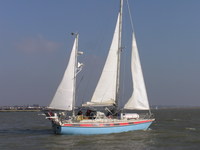
| About: | Captain Sarah and Chief Engineer/Mate Pip moved on board in 2003 and finally made the break in 2006. Roaring Girl, launched in 1977, has already been round the world once, and has a lot more seamiles than the two of us put together. |
| Extra: | These pages aim to bring you our adventures as they happen, as well as Roaring Girl's sailing prowess. And to show off Pip's silverwork as well. |
Gallery not available
Who we are
Who: Pip Harris and Sarah Tanburn
Port: Ipswich
SailBlogs Friends

