Log of the Argonaut
25 July 2012 | Orcas Island
19 October 2011 | Orcas Island
04 August 2011 | Orcas Island, U.S. San Juan Islands
14 June 2011 | U.S. Southwest
20 May 2011 | Durango, Co
19 May 2011 | Durango Colorado
21 March 2011 | Washington State
24 February 2011 | Between South and North
13 February 2011 | Aussie
17 January 2011 | Bundaberg, Australia
24 November 2010 | Bundaberg Australia
18 October 2010 | Noumea
06 October 2010 | Port Vila, Vanuatu
09 September 2010 | Between Port Resolution and Port Vila, Vanuatu
03 September 2010 | Tanna Island, Vanuatu
27 July 2010 | Mamanuka Islands, Fiji
21 May 2010 | Malolo Island
05 April 2010 | EnZed
06 March 2010 | Marlborough District
26 February 2010 | EnZed: South Island
Requiem for a Voyage
25 July 2012 | Orcas Island
Landlubber
Requiem for a voyage
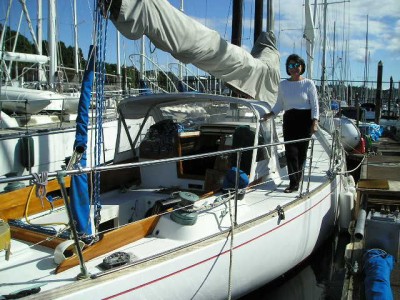
This isn’t to imply that I’m done blogging our adventures, it’s just time to put some closure on the last voyage of the Argonaut before the ol’ memory dims.
One important quality in a voyaging sailor is a short memory. If you remembered every detail in vivid recall, you might not leave the dock again! However... the same quality is not a plus for writers. It’s been more than a year since we arrived back in the US from Australia. If I don’t get this down, it’ll become fuzzy legend instead of a facsimile of fact.
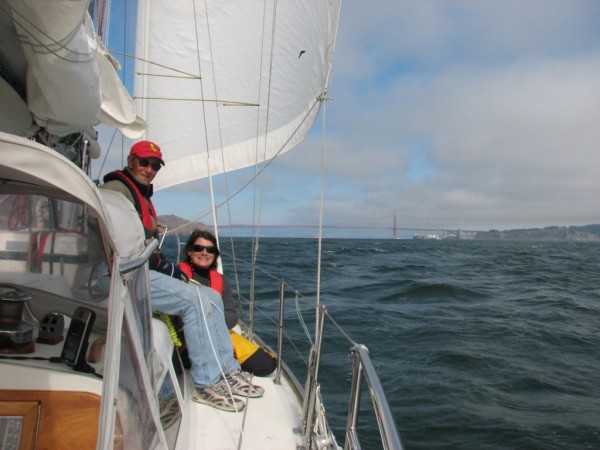
Regular reader, friends and relations might remember that we set out in August 2006 with Yacht Club (CYCE) friends, Paul and Chris, for the Bay Area. There isn’t much to recommend this passage so the quicker you get it over the better.
The only advice I might offer, and it may be time specific, is: As long as you have a Northwesterly, don’t run off out to sea. I don’t think we were more than five or ten miles off ninety nine percent of the time. If a Sou’westerly springs up, get your butt into harbor and wait for a favorable breeze.
Don’t forget your radar and a wind vane! Hand steering, blind, in a cold fog, will soon make a landlubber of the staunchest sailor. That said... yes, there are lunatics out there. Good luck to ‘em and hope you don’t meet one on a dark foggy night.
We burned a lot of diesel in 800 miles. What breeze we had was two gales and nice half day going in under The Gate. In the middle of the second gale we opted for a few days in Crescent City to rest and repair before motoring all the way to Point Reyes, where the NW picked up to 25 for a great sail across the potato patch and in under the bridge.
Taking a left immediately under the bridge, we were searching for a cheap place to dock when we passed the St Francis YC. A quick poll of the motley crew and I was on the horn.
“St Francis? This is the yacht Argonaut. Might you have a slip available?”
“Yes sir, we do. And when might you be expected?”
“Will ten minutes be ok?”
Nice place. Really nice place. Nothing like a hot shower, a cold beer and a great meal to top off an otherwise uncomfortable trip.
To be Continued
This isn’t to imply that I’m done blogging our adventures, it’s just time to put some closure on the last voyage of the Argonaut before the ol’ memory dims.
One important quality in a voyaging sailor is a short memory. If you remembered every detail in vivid recall, you might not leave the dock again! However... the same quality is not a plus for writers. It’s been more than a year since we arrived back in the US from Australia. If I don’t get this down, it’ll become fuzzy legend instead of a facsimile of fact.
Regular reader, friends and relations might remember that we set out in August 2006 with Yacht Club (CYCE) friends, Paul and Chris, for the Bay Area. There isn’t much to recommend this passage so the quicker you get it over the better.
The only advice I might offer, and it may be time specific, is: As long as you have a Northwesterly, don’t run off out to sea. I don’t think we were more than five or ten miles off ninety nine percent of the time. If a Sou’westerly springs up, get your butt into harbor and wait for a favorable breeze.
Don’t forget your radar and a wind vane! Hand steering, blind, in a cold fog, will soon make a landlubber of the staunchest sailor. That said... yes, there are lunatics out there. Good luck to ‘em and hope you don’t meet one on a dark foggy night.
We burned a lot of diesel in 800 miles. What breeze we had was two gales and nice half day going in under The Gate. In the middle of the second gale we opted for a few days in Crescent City to rest and repair before motoring all the way to Point Reyes, where the NW picked up to 25 for a great sail across the potato patch and in under the bridge.
Taking a left immediately under the bridge, we were searching for a cheap place to dock when we passed the St Francis YC. A quick poll of the motley crew and I was on the horn.
“St Francis? This is the yacht Argonaut. Might you have a slip available?”
“Yes sir, we do. And when might you be expected?”
“Will ten minutes be ok?”
Nice place. Really nice place. Nothing like a hot shower, a cold beer and a great meal to top off an otherwise uncomfortable trip.
To be Continued
The saga continues
19 October 2011 | Orcas Island
Sancho: Always gorgeous
Twofer:
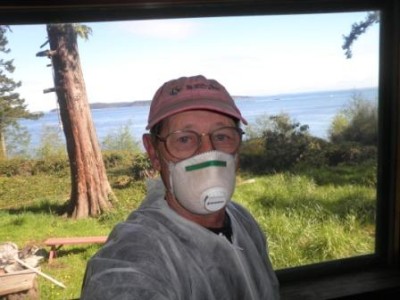
I'm so far behind in my blogs, this will be a twofer. The Port Townsend Wooden Boat Festival and the home project update.
The weather here in the San Juans is relatively nicer than The Mainland. Seems it's always raining in Seattle and we look out the window to blue sky. Chilly, compared to what we've been accustomed to the past five years in the tropics: Endless summer.
Since the last entry, we blew paint on the outside, tacked up fascia board all around, installed new low-e windows throughout, painted the kitchen and bedroom under remodel, bought a new refrigerator, gas fireplace insert, insulated the crawl space, built a stair/pathway to the beach, and Liz has done a lot of digging in the dirt... hacking planting beds from the weeds, leveling and sowing grass while I hack back the jungle of Ocean Spray, Devil's Club, and Himalayan Blackberries overrunning the place.
Still to do: New kitchen floor, cabinets and counter tops, put a closet/bookcase (back to back) where the old oil furnace lived, window coverings (neighbors can't look in anyway!) and.... and... maybe we're done for the winter! No, seriously.
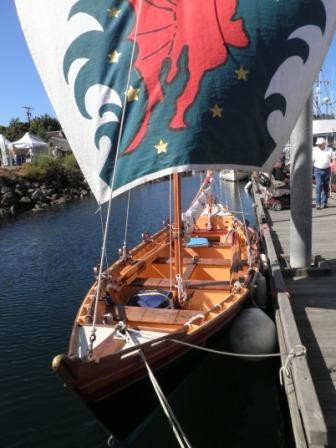
We took a September break to go to the Port Townsend Wooden Boat Festival. This year featured over three hundred boats, the same number of exhibitors, plus seminars, food booths and music. The crowd was estimated at thirty thousand over the three days and I believe it.
We never plan far enough in advance to get accommodations in the immediate area so we always end up at the Sequim Bay State Park - 25 miles away. No big deal. It's a scenic drive in an especially scenic part of a very scenic state! Sit back and enjoy the ride.
As for the show, I love wood boats but I'd never buy another one. I've had two over the years and loved them but... like my British cars, the TR4 and MG, only wealthy, masochistic, dreamers and fools own one. Life is too short; rather, my attention span is too short and there are too many other things to do in this life other than work on endless projects. Still, they're works of art. I love to look at them and dream that I'm a wealthy, masochistic dreamer.
I'll have pics in the gallery soon. Enjoy.
I'm so far behind in my blogs, this will be a twofer. The Port Townsend Wooden Boat Festival and the home project update.
The weather here in the San Juans is relatively nicer than The Mainland. Seems it's always raining in Seattle and we look out the window to blue sky. Chilly, compared to what we've been accustomed to the past five years in the tropics: Endless summer.
Since the last entry, we blew paint on the outside, tacked up fascia board all around, installed new low-e windows throughout, painted the kitchen and bedroom under remodel, bought a new refrigerator, gas fireplace insert, insulated the crawl space, built a stair/pathway to the beach, and Liz has done a lot of digging in the dirt... hacking planting beds from the weeds, leveling and sowing grass while I hack back the jungle of Ocean Spray, Devil's Club, and Himalayan Blackberries overrunning the place.
Still to do: New kitchen floor, cabinets and counter tops, put a closet/bookcase (back to back) where the old oil furnace lived, window coverings (neighbors can't look in anyway!) and.... and... maybe we're done for the winter! No, seriously.
We took a September break to go to the Port Townsend Wooden Boat Festival. This year featured over three hundred boats, the same number of exhibitors, plus seminars, food booths and music. The crowd was estimated at thirty thousand over the three days and I believe it.
We never plan far enough in advance to get accommodations in the immediate area so we always end up at the Sequim Bay State Park - 25 miles away. No big deal. It's a scenic drive in an especially scenic part of a very scenic state! Sit back and enjoy the ride.
As for the show, I love wood boats but I'd never buy another one. I've had two over the years and loved them but... like my British cars, the TR4 and MG, only wealthy, masochistic, dreamers and fools own one. Life is too short; rather, my attention span is too short and there are too many other things to do in this life other than work on endless projects. Still, they're works of art. I love to look at them and dream that I'm a wealthy, masochistic dreamer.
I'll have pics in the gallery soon. Enjoy.
State of the Art
04 August 2011 | Orcas Island, U.S. San Juan Islands
Sancho: Summer! Finally!
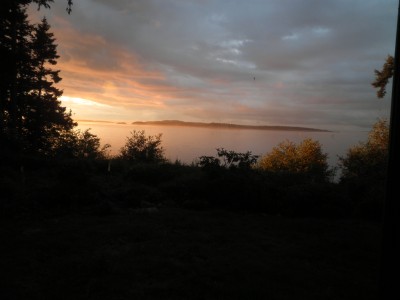
State of the Art
At first glance, the house and yard was a nightmare. Crap everywhere. In the bushes, carport full... All-in-all about seven dumpsters worth. I guess it's easier to throw shit in the yard than pay a couple of bucks hauling it to the dump.
Then there's the dead appliances. A stacking washer & dryer and a chest freezer full of long thawed, food. Sweet. Far from the end, the list grows daily. Part of the chimney cap fell down the flue. Rats ran amok in the crawl space, ripping down all the insulation. The yard is a jungle... which is why it hid all those wheels and tires, batteries, twisted bicycle, rotting dresser, shredded mattress, pickup-bed lockbox full of styro peanuts, miles of wire, crumpled fencing, gas cans, oil cans, beer bottles, pvc pipe, construction debris... did I leave anything out?
The hardwood floors throughout were ruined. It looked like someone rebuilt their engine in the living room. Seven days of sanding brought it close to great, but I think we'd have worn through the flooring before all the dirt was out. Liz put four coats of finish on while I was on a road trip to the SW. She also painted most of the interior as the decor needed serious help. Tenants started a lot of projects but I don't think they ever finished one.
Since we were on a roll, I tore out the bedroom closet that was framed out into the room rather than recessed in the wall as usual. This necessitated ripping up some of the hardwoods and reinstalling them, knocking out the wall between the closet and pantry behind , reframing the back wall and the opening for bi-fold doors.
Now. With the closet in the wall where it belongs, the door opened on the wrong side and the light switch would be behind it. Up into the attic (through the new attic access hole) and drop wires down the other side of the door then re-hang the door on the opposite side. Whew! Almost there. Liz threw a few coats of finish on the floor. With new windows (throughout the house) and exterior paint it'll look like a house rather than a garden shed.
Oh yeah, We re-roofed the carport, cutting six inches of rotten overhang off all along three sides. Liz scraped a roof garden of moss of the main house so that should last another couple of years. She also added lots of insulation to the attic and is tearing out the insulation in the crawl space that the rats (deceased) ripped up. We'll have new in there before long. Now all the vents are screened and a yummie treat is waiting, should any of the four legged varmints manage to defeat our defenses.
Hopefully, there'll be some summer left when we get the bigger projects done! Maybe we can actually move out of the guest cottage (hooch) into the main house and have some time to play.
Be sure to go to the 'Gallery' for pics.
At first glance, the house and yard was a nightmare. Crap everywhere. In the bushes, carport full... All-in-all about seven dumpsters worth. I guess it's easier to throw shit in the yard than pay a couple of bucks hauling it to the dump.
Then there's the dead appliances. A stacking washer & dryer and a chest freezer full of long thawed, food. Sweet. Far from the end, the list grows daily. Part of the chimney cap fell down the flue. Rats ran amok in the crawl space, ripping down all the insulation. The yard is a jungle... which is why it hid all those wheels and tires, batteries, twisted bicycle, rotting dresser, shredded mattress, pickup-bed lockbox full of styro peanuts, miles of wire, crumpled fencing, gas cans, oil cans, beer bottles, pvc pipe, construction debris... did I leave anything out?
The hardwood floors throughout were ruined. It looked like someone rebuilt their engine in the living room. Seven days of sanding brought it close to great, but I think we'd have worn through the flooring before all the dirt was out. Liz put four coats of finish on while I was on a road trip to the SW. She also painted most of the interior as the decor needed serious help. Tenants started a lot of projects but I don't think they ever finished one.
Since we were on a roll, I tore out the bedroom closet that was framed out into the room rather than recessed in the wall as usual. This necessitated ripping up some of the hardwoods and reinstalling them, knocking out the wall between the closet and pantry behind , reframing the back wall and the opening for bi-fold doors.
Now. With the closet in the wall where it belongs, the door opened on the wrong side and the light switch would be behind it. Up into the attic (through the new attic access hole) and drop wires down the other side of the door then re-hang the door on the opposite side. Whew! Almost there. Liz threw a few coats of finish on the floor. With new windows (throughout the house) and exterior paint it'll look like a house rather than a garden shed.
Oh yeah, We re-roofed the carport, cutting six inches of rotten overhang off all along three sides. Liz scraped a roof garden of moss of the main house so that should last another couple of years. She also added lots of insulation to the attic and is tearing out the insulation in the crawl space that the rats (deceased) ripped up. We'll have new in there before long. Now all the vents are screened and a yummie treat is waiting, should any of the four legged varmints manage to defeat our defenses.
Hopefully, there'll be some summer left when we get the bigger projects done! Maybe we can actually move out of the guest cottage (hooch) into the main house and have some time to play.
Be sure to go to the 'Gallery' for pics.
Mesa Verde, Grand Canyon
14 June 2011 | U.S. Southwest
Sancho: Weather unseasonably chilly
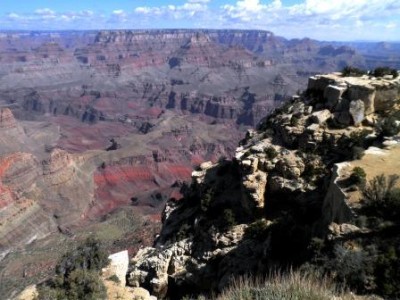
The Road: Endings and beginnings
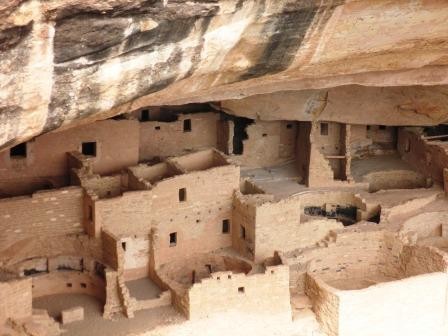
Well kiddies, the wee Tiki Tour with my old buddy through the Southwest has come to an end. Other than the black clouds following us around, the Southwest never ceases to amaze. One thing that stands out is the driving distances between nowhere and somewhere through mile after mile of nothing but sagebrush, jackrabbits and coyotes. The West is a big place with damn few people. Maybe that’s part of the reason things like Mesa Verde and the Grand Canyon are so stunning. They’re set in a desert landscape like rare jewels.
The main thing you can say about the Grand Canyon is: It’s Grand. It’s the biggest ditch I’ve seen; carved through layers of sandstone deposited over millions of years in a long vanished sea. As I understand it, the Pacific Plate shoulders its way under North American Plate, raising mountains and draining the ancient seas. The result is visually dramatic everywhere in the West. That’s why we live here! Let the people back in the flatlands have their meager scenery. We like ours larger than life.
Another stretch of god awful driving is from the Grand Canyon to Las Vegas. Zzzzzzzz…. Still, Las Vegas is something you have to see… once. The place is off the hook. Other than the sensory light show, I’d rather blow my dough on boats than craps (why do you think they call it craps?) We were off to Reno the next day. Again, not to gamble, it’s just on the route over the Sierra Nevada to Santa Rosa to see my sister before pointing north toward home.
We were thinking of camping at Lake Tahoe but it was snowing and I’d completely forgotten it was Memorial Day weekend. There was a thirty mile dead stop backup coming out of Vallejo through Sacramento. All those folks were going somewhere we were determined to avoid.
Santa Rosa is a nice town set in the Sonoma Valley wine country. From here north is some of the best motorcycle touring country I’ve ever seen. Too bad I don't have a moto either. Ah, but that's cheaper to cure than the lack of a boat!
North out of Santa Rosa on Highway 101, the home stretch winds through the Redwood forest, along the Oregon Coast to Newport and a stop to see our old crusin’ buddies from Wind Dancer: Chris, Richelle and in alphabetical order, the two offspring, Grace and Grant... Portland the next day to see Larry’s daughter Anna, then Wenatchee. The end of the road for Larry. I still had a few hours’ drive over the mountains and another night in a motel before catching the ferry for Orcas Island. Whew! Good trip. WIsh the weather was warmer, but you get what you get.
Well kiddies, the wee Tiki Tour with my old buddy through the Southwest has come to an end. Other than the black clouds following us around, the Southwest never ceases to amaze. One thing that stands out is the driving distances between nowhere and somewhere through mile after mile of nothing but sagebrush, jackrabbits and coyotes. The West is a big place with damn few people. Maybe that’s part of the reason things like Mesa Verde and the Grand Canyon are so stunning. They’re set in a desert landscape like rare jewels.
The main thing you can say about the Grand Canyon is: It’s Grand. It’s the biggest ditch I’ve seen; carved through layers of sandstone deposited over millions of years in a long vanished sea. As I understand it, the Pacific Plate shoulders its way under North American Plate, raising mountains and draining the ancient seas. The result is visually dramatic everywhere in the West. That’s why we live here! Let the people back in the flatlands have their meager scenery. We like ours larger than life.
Another stretch of god awful driving is from the Grand Canyon to Las Vegas. Zzzzzzzz…. Still, Las Vegas is something you have to see… once. The place is off the hook. Other than the sensory light show, I’d rather blow my dough on boats than craps (why do you think they call it craps?) We were off to Reno the next day. Again, not to gamble, it’s just on the route over the Sierra Nevada to Santa Rosa to see my sister before pointing north toward home.
We were thinking of camping at Lake Tahoe but it was snowing and I’d completely forgotten it was Memorial Day weekend. There was a thirty mile dead stop backup coming out of Vallejo through Sacramento. All those folks were going somewhere we were determined to avoid.
Santa Rosa is a nice town set in the Sonoma Valley wine country. From here north is some of the best motorcycle touring country I’ve ever seen. Too bad I don't have a moto either. Ah, but that's cheaper to cure than the lack of a boat!
North out of Santa Rosa on Highway 101, the home stretch winds through the Redwood forest, along the Oregon Coast to Newport and a stop to see our old crusin’ buddies from Wind Dancer: Chris, Richelle and in alphabetical order, the two offspring, Grace and Grant... Portland the next day to see Larry’s daughter Anna, then Wenatchee. The end of the road for Larry. I still had a few hours’ drive over the mountains and another night in a motel before catching the ferry for Orcas Island. Whew! Good trip. WIsh the weather was warmer, but you get what you get.
Durango to Silverton RR
20 May 2011 | Durango, Co
Mike: weather = cold and snowy
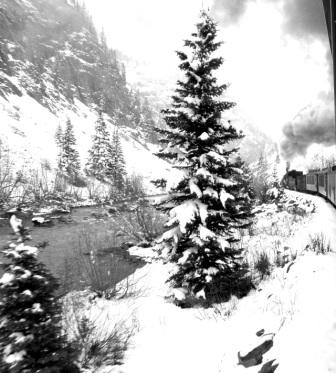
Durango to Silverton: A trip on the Durango to Silverton railway
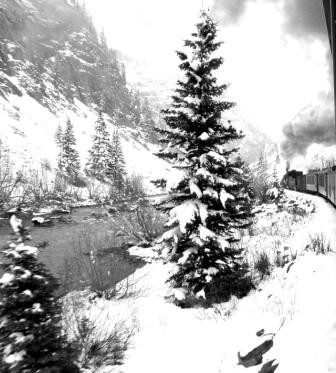
The weather was lousy (for humans) and, as is often the case, great for photos. It wasn’t great when we left Moab and rain relentlessly turned to snow as we gained elevation. Cortez, then Durango at 6500 feet (2000 meters). Passes farther east were requiring chains. We were lucky to squeak through and find a motel room without too much fuss. Just a little white knuckle driving. No way I’m camping in this crap.
The Durango to Silverton narrow gauge (tracks are one meter apart) railway was founded in 1870 and at one time connected to rail lines in the rest of the U.S. Today it runs on a 45 mile (72km) track between Durango and Silverton Colorado – at 9273 feet (2853 meters). Besides dragging tourists to Silverton, the trains also serve residents living where there is no road.
The D&RG line runs five trains. As there isn’t a store where you can pop in and buy old locomotive parts, the line has an extensive machine shop and foundry. All parts to keep them running have to be made from scratch. They’re looking to add two locomotives but, as you can imagine, they’re hard to come by.
All-in-all, it was a unique experience, weather be damned. All sailors know you get what you get and deal with it. The cars were first class, bar available, toasty, with an attendant to supply refreshments and narration. Worth every penny and then some.
The weather was lousy (for humans) and, as is often the case, great for photos. It wasn’t great when we left Moab and rain relentlessly turned to snow as we gained elevation. Cortez, then Durango at 6500 feet (2000 meters). Passes farther east were requiring chains. We were lucky to squeak through and find a motel room without too much fuss. Just a little white knuckle driving. No way I’m camping in this crap.
The Durango to Silverton narrow gauge (tracks are one meter apart) railway was founded in 1870 and at one time connected to rail lines in the rest of the U.S. Today it runs on a 45 mile (72km) track between Durango and Silverton Colorado – at 9273 feet (2853 meters). Besides dragging tourists to Silverton, the trains also serve residents living where there is no road.
The D&RG line runs five trains. As there isn’t a store where you can pop in and buy old locomotive parts, the line has an extensive machine shop and foundry. All parts to keep them running have to be made from scratch. They’re looking to add two locomotives but, as you can imagine, they’re hard to come by.
All-in-all, it was a unique experience, weather be damned. All sailors know you get what you get and deal with it. The cars were first class, bar available, toasty, with an attendant to supply refreshments and narration. Worth every penny and then some.
On the road
19 May 2011 | Durango Colorado
Snowing! In May!
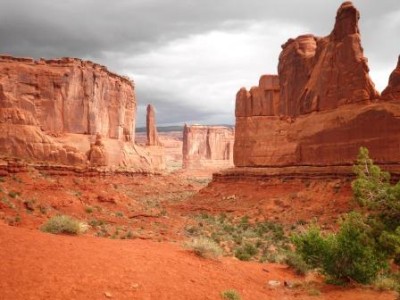
On The Road
Ok. What's wrong with this picture. Larry and I leave Seattle for the sunny Southwest. No sooner are we in Utah than it's raining and snowing while the rainy Northwest is seventy and sunny! Oh well, you take what you get.
We're taking a couple week sabbatical to go for a Tiki Tour of the sights, both Anasazi and scenery, of the desert Southwest. Larry and I are high school buds who took off traveling together when we were seventeen. Now we're at it again fifty years later. Some things aren't the same.
Driving through eastern Washington, through part of Idaho into Utah, hammers home the point... that most of the American West is vast vacant tracts of.... nothing. Sage brush, coyotes, Jack rabbits, and Red Tail Hawks cruising the skies for a meal of unwary mouse. Small towns are sprinkled here and there with a small city wherever there is a reason for one. Out here there's not much reason.
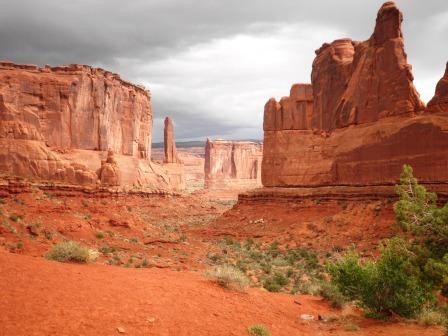
In places like Moab, where the Colorado River has carved down through the layers from the high plains, the landscape goes from deadly boring to dramatic within a few miles. Our firs stop with anything to see is Arches National Park just outside Moab. The $10 lifetime National Park Pass for seniors has to be the best bargain in America!
Don't let the damned Republicans mess with things like this. They'll have our parks either sold to, or run by some snake crony. Our National Parks, DNR (Department of Natural Resources), Forrest Service, Department of the Interior, State, County and city parks are national treasures meant for the enjoyment of all. Not profit for the few. Get out the pitch forks and torches.
Ok. What's wrong with this picture. Larry and I leave Seattle for the sunny Southwest. No sooner are we in Utah than it's raining and snowing while the rainy Northwest is seventy and sunny! Oh well, you take what you get.
We're taking a couple week sabbatical to go for a Tiki Tour of the sights, both Anasazi and scenery, of the desert Southwest. Larry and I are high school buds who took off traveling together when we were seventeen. Now we're at it again fifty years later. Some things aren't the same.
Driving through eastern Washington, through part of Idaho into Utah, hammers home the point... that most of the American West is vast vacant tracts of.... nothing. Sage brush, coyotes, Jack rabbits, and Red Tail Hawks cruising the skies for a meal of unwary mouse. Small towns are sprinkled here and there with a small city wherever there is a reason for one. Out here there's not much reason.
In places like Moab, where the Colorado River has carved down through the layers from the high plains, the landscape goes from deadly boring to dramatic within a few miles. Our firs stop with anything to see is Arches National Park just outside Moab. The $10 lifetime National Park Pass for seniors has to be the best bargain in America!
Don't let the damned Republicans mess with things like this. They'll have our parks either sold to, or run by some snake crony. Our National Parks, DNR (Department of Natural Resources), Forrest Service, Department of the Interior, State, County and city parks are national treasures meant for the enjoyment of all. Not profit for the few. Get out the pitch forks and torches.

| Vessel Name: | Argonaut |
| Vessel Make/Model: | Cal-40 |
| Hailing Port: | Seattle |
| Crew: | Mike & Liz |
| About: | |
| Extra: | It has been an amazing journey. I could have stayed home, or gone no farther than Mexico but I knew I'd never see this any other way. If there were only re-runs... The lesson is: If you wait until you're ready, you'll never go. So get off your butt and do it - whatever IT is. |
Argonaut's Photos - Wishful thinking (Main)
 |
Looking back at five years voyaging across the Pacific
12 Photos
Created 25 July 2012
|
 |
Mix of Port Townsend Wooden Boat Festival and home re-do project
25 Photos
Created 28 October 2011
|
 |
 |
 |
 |
 |
 |
 |
 |
 |
 |
 |
 |
 |
 |
 |
 |
Continuation of New Zealand travel 2009/2110
40 Photos | 1 Sub-Album
Created 13 January 2010
|
 |
 |
 |
 |
 |
 |
Foods from across the Pacific. From the Marquesas to Fiji and New Zealand
30 Photos
Created 25 October 2009
|
 |
 |
 |
 |
 |
 |
 |
 |
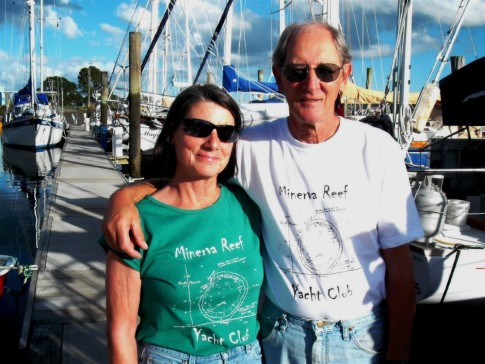 |
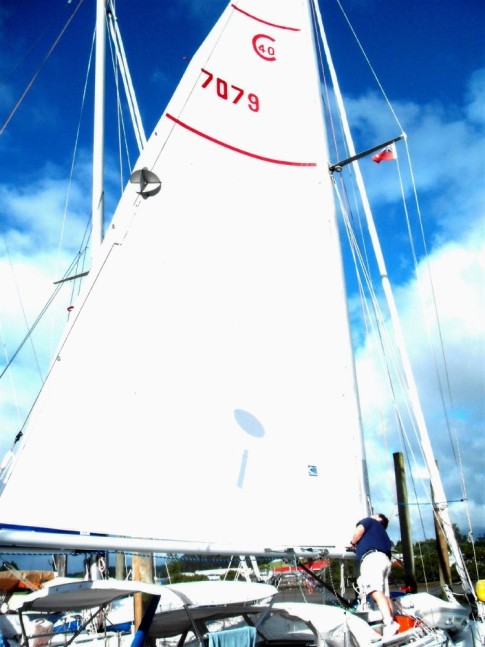
Minerva Reef shirts and maintenance projects
12 Photos
Created 29 April 2009
|
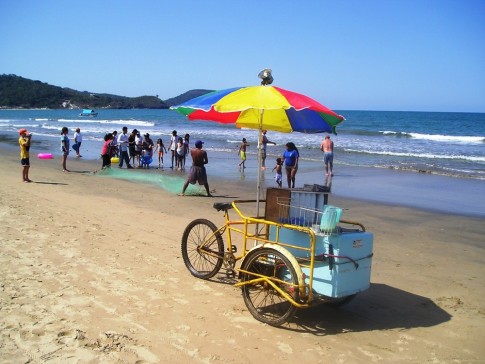 |
Chacala, Guayabitos, Los Ayala,
Lo de Marco, San Pancho, Saulita
36 Photos
Created 21 April 2009
|
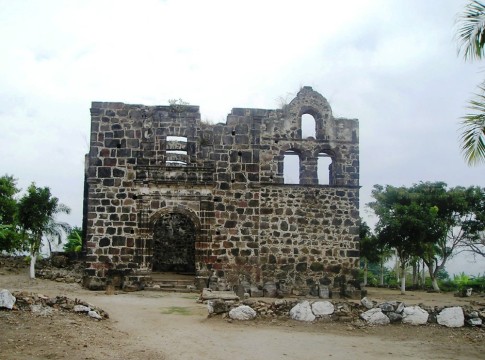 |
In and around San Blas.
Didn't take many pics.
Too busy doing damn little.
9 Photos
Created 14 April 2009
|
 |
 |
 |
 |
 |
 |
 |
Hauraki Gulf. Classic Yacht Regatta and AC boats
17 Photos
Created 17 February 2009
|
 |
 |
 |
 |
 |
Pacific Festival of the Arts/Pago Pago
12 Photos | 1 Sub-Album
Created 6 January 2009
|
Cal 40 Argonaut
Who: Mike & Liz
Port: Seattle
Gallery
SailBlogs Friends