Sailing around the Caribbean
In 2007 our family sailed from the Chesapeake Bay to the Caribbean, visiting most of the islands and stopping in Cartagena, Colombia for hurricane season. We just returned to the Chesapeake after visiting many Central American countries and islands.
11 July 2009 | Kikuyu in Annapolis Harbor, Looking toward the City
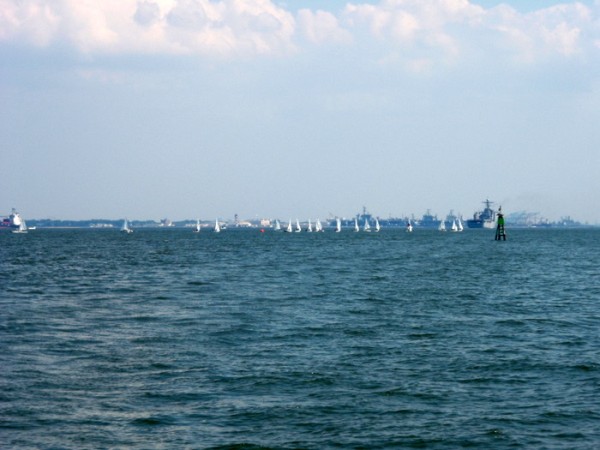
29 June 2009 | The National Young Women's Sailing Competition in Hampton
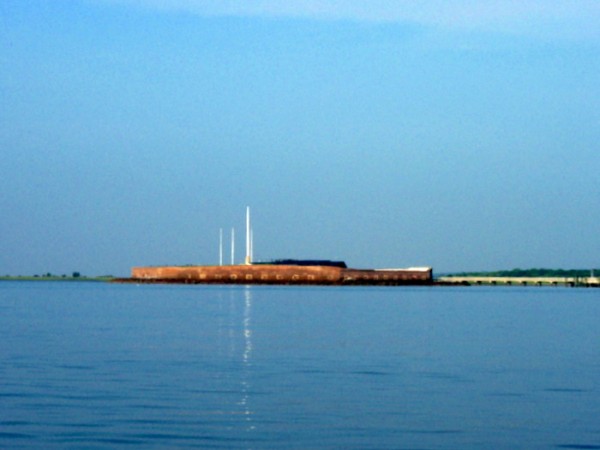
15 June 2009 | Fort Sumter, Charleston Harbor
02 June 2009 | Kennedy Space Center
01 June 2009 | Beaudacious and Third Boat that Joined us at Anchor in Fort Pierce
31 May 2009 | Our Friends Beaudacions' Mast was Taller than Most Bridges when Opened
25 May 2009 | View of a Canal from Las Olas Marina Boulevard
21 May 2009 | Approaching Miami Harbor
18 May 2009 | One of the Six-toed Cats Sleeping on Hemingway's Master Bed
16 May 2009 | Approaching Key West - Daniel at the bow trying to see land with the binoculars
08 May 2009 | Main Town Harbor
06 May 2009 | Maya Ritual Reenactment
29 April 2009 | Town's Harbor
27 April 2009 | Daniel at the Blue Hole
25 April 2009 | The Weather Turned Bad
22 April 2009 | View of City from Kikuyu
21 April 2009 | Dangriga Harbor -Daniel doing school work!
19 April 2009 | Whale Shark, Picture by Chelsea Tolppanen
15 April 2009 | kikuyu in the Middle at Anchor in East Harbor
Sailing up the Chesapeake Bay to Annapolis – End of Our Voyage
11 July 2009 | Kikuyu in Annapolis Harbor, Looking toward the City
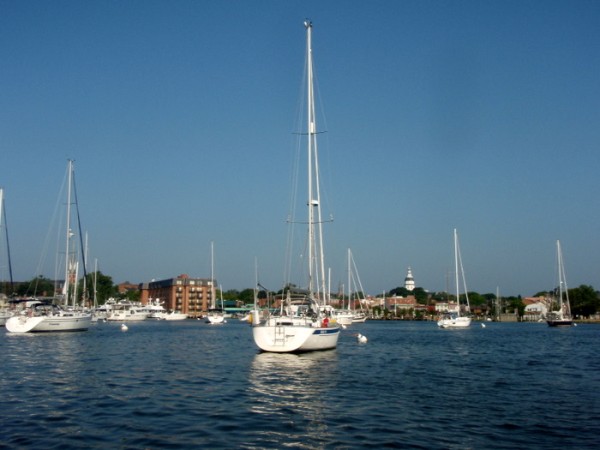
We had pondered taking Kikuyu up the Potomac River but after careful consideration we decided to take her up the Chesapeake, making our destination our favorite port on the Bay: Annapolis! Annapolis' harbor, with its constant winds and deep waters, is said to be "the sailing capital of the world". Annapolis is the place that inspired us to start sailing. We fell in love with its breezy harbor and the myriad sailboats plying its waters. We learned to sail in Annapolis and have visited there many times over the years. Our first sailing trip there was in 1997 in our first boat, Isabela. We had very little experience on the water and Daniel was not even 1 year old. Annapolis is also home to our engine guy and other marine services and we enjoy attending the annual boat show in October and just being tourists in this wonderful historic city, the capital of Maryland and onetime capital of the United States.
We found Kikuyu in the South River near Annapolis in 2006 and sailed it "South" (a few miles to Herring Bay) one crisp, clear day in December. Annapolis saw our sailing lives grow from the Bay to the big Atlantic and the Caribbean Seas and what a better place to choose but this city to culminate our 2-year odyssey? We had to end our trip in Annapolis and celebrate our voyage in which we accomplished all we wanted to accomplish and more.
We decided to sail up the Bay slowly, stopping in the late afternoon to anchor in a river or creek so that we could sleep, enjoy the beautiful anchorages, and enjoy our sail up the Bay more. With over 150 rivers and streams, the Chesapeake is the largest estuary in the United States. Many of these rivers and streams are deep enough for keeled vessels to go into and anchor. On Tuesday, we moved Kikuyu from Hampton Pier Marina to Hampton Flats and anchored there the first night to ready ourselves for the 5 day trip.
The second day we encountered a strong head wind out of the North and a countercurrent which made our progress very slow. We decided to call it a day early in the afternoon and sailed up the York River, anchoring in a pristine anchorage in Sarah Creek. Anchorages like this, where we were the only boat surrounded by lush vegetation filled with wildlife and a variety of bird concerts, are one of the reasons we have loved sailing on the Chesapeake over the years. We have never tired of these gorgeous anchorages.
On the third day we sailed 50 miles to Reedville and anchored in Cockrell Creek off the Greater Wicomico River. Reedville is a fishing town and when their processing plant is cooking the day's catch of menhaden, the smell can knock you off your feet. They were cooking as we came up the Cockrell. However, once we got upwind of the plant the air was fresh and we enjoyed a nice evening in another beautiful anchorage.
The fourth day we sailed Kikuyu to Solomons Island in the Patuxent River, a place that has become a boaters' destination. The Patuxent River leading northwest is wide and interesting. Upon passing under an over 100-foot tall bridge we saw depths of over 100 feet as we rounded a white sand bar that comes very close to the channel. It's amazing to see such depths anywhere in the Chesapeake, especially so close to land, except only along the main ship channel leading up the Bay. We anchored Kikuyu in a wide cove in Mill Creek (the second creek in the Patuxent named Mill) just beyond bridge. Again we were surrounded by lush vegetation and could hear a lot of wildlife, especially the Ospreys (also called Sea Hawks) as parents and chicks chirp very loudly. Ospreys are diurnal fish-eating birds of prey and are abundant in the Bay. They build amazingly tall nests made of sticks, driftwood and seaweed, which they have planted on many of the markers leading up channels in the Bay. These birds usually mate for life with both parents raising their chicks for a 5-month period of partnership. It is fascinating to watch both parents come and go from the nest, and stand on its edge as boats go by very near them. We have come to love watching and hearing these birds that we feel are one of the Chesapeake Bay's trademarks.
After anchoring, our good friends and old neighbors Tip and Marsha who have a home in the Solomons Island area motored over to our boat to greet us. It was great to see them and realize that we were getting very close to home.
Finally, on Saturday July 11 at 2PM we arrived to Annapolis. As we expected the wind picked up as we approached the Severn River which was filled with all kinds of sail boats smooth-sailing up and down. We entered the harbor under full sails and Kikuyu, looking more beautiful than ever and majestically stout, sailed into the harbor very proud of delivering its crew of three alive and well. We dropped Kikuyu's sails, approached the mooring field and took a ball as we had done many times in the past. After securing Kikuyu we fell silent and gazed at the Inner Harbor, the buildings and all the people looking out as if they were there to greet us or perhaps dreaming of their own voyage. Words could not express what we felt.
We sat in Kikuyu's cockpit and were immensely thankful for many things -- for our family and friends who supported and followed our travels, encouraging us and worrying about us; for Kikuyu, our partner and friend, who gave us shelter and sailed us safely and swiftly to the many enchanting places we have visited; for the many people we met along the way: the natives such as the Kuna, the many places we stopped , and the sailors many of whom are now dear friends; for having achieved more than we had ever dreamed; and, lastly, for the unending beauty of the Atlantic Ocean and Caribbean Sea and all of those beautiful islands and countries that gave us so much enjoyment, amazement, wonder and hospitality.
We found Kikuyu in the South River near Annapolis in 2006 and sailed it "South" (a few miles to Herring Bay) one crisp, clear day in December. Annapolis saw our sailing lives grow from the Bay to the big Atlantic and the Caribbean Seas and what a better place to choose but this city to culminate our 2-year odyssey? We had to end our trip in Annapolis and celebrate our voyage in which we accomplished all we wanted to accomplish and more.
We decided to sail up the Bay slowly, stopping in the late afternoon to anchor in a river or creek so that we could sleep, enjoy the beautiful anchorages, and enjoy our sail up the Bay more. With over 150 rivers and streams, the Chesapeake is the largest estuary in the United States. Many of these rivers and streams are deep enough for keeled vessels to go into and anchor. On Tuesday, we moved Kikuyu from Hampton Pier Marina to Hampton Flats and anchored there the first night to ready ourselves for the 5 day trip.
The second day we encountered a strong head wind out of the North and a countercurrent which made our progress very slow. We decided to call it a day early in the afternoon and sailed up the York River, anchoring in a pristine anchorage in Sarah Creek. Anchorages like this, where we were the only boat surrounded by lush vegetation filled with wildlife and a variety of bird concerts, are one of the reasons we have loved sailing on the Chesapeake over the years. We have never tired of these gorgeous anchorages.
On the third day we sailed 50 miles to Reedville and anchored in Cockrell Creek off the Greater Wicomico River. Reedville is a fishing town and when their processing plant is cooking the day's catch of menhaden, the smell can knock you off your feet. They were cooking as we came up the Cockrell. However, once we got upwind of the plant the air was fresh and we enjoyed a nice evening in another beautiful anchorage.
The fourth day we sailed Kikuyu to Solomons Island in the Patuxent River, a place that has become a boaters' destination. The Patuxent River leading northwest is wide and interesting. Upon passing under an over 100-foot tall bridge we saw depths of over 100 feet as we rounded a white sand bar that comes very close to the channel. It's amazing to see such depths anywhere in the Chesapeake, especially so close to land, except only along the main ship channel leading up the Bay. We anchored Kikuyu in a wide cove in Mill Creek (the second creek in the Patuxent named Mill) just beyond bridge. Again we were surrounded by lush vegetation and could hear a lot of wildlife, especially the Ospreys (also called Sea Hawks) as parents and chicks chirp very loudly. Ospreys are diurnal fish-eating birds of prey and are abundant in the Bay. They build amazingly tall nests made of sticks, driftwood and seaweed, which they have planted on many of the markers leading up channels in the Bay. These birds usually mate for life with both parents raising their chicks for a 5-month period of partnership. It is fascinating to watch both parents come and go from the nest, and stand on its edge as boats go by very near them. We have come to love watching and hearing these birds that we feel are one of the Chesapeake Bay's trademarks.
After anchoring, our good friends and old neighbors Tip and Marsha who have a home in the Solomons Island area motored over to our boat to greet us. It was great to see them and realize that we were getting very close to home.
Finally, on Saturday July 11 at 2PM we arrived to Annapolis. As we expected the wind picked up as we approached the Severn River which was filled with all kinds of sail boats smooth-sailing up and down. We entered the harbor under full sails and Kikuyu, looking more beautiful than ever and majestically stout, sailed into the harbor very proud of delivering its crew of three alive and well. We dropped Kikuyu's sails, approached the mooring field and took a ball as we had done many times in the past. After securing Kikuyu we fell silent and gazed at the Inner Harbor, the buildings and all the people looking out as if they were there to greet us or perhaps dreaming of their own voyage. Words could not express what we felt.
We sat in Kikuyu's cockpit and were immensely thankful for many things -- for our family and friends who supported and followed our travels, encouraging us and worrying about us; for Kikuyu, our partner and friend, who gave us shelter and sailed us safely and swiftly to the many enchanting places we have visited; for the many people we met along the way: the natives such as the Kuna, the many places we stopped , and the sailors many of whom are now dear friends; for having achieved more than we had ever dreamed; and, lastly, for the unending beauty of the Atlantic Ocean and Caribbean Sea and all of those beautiful islands and countries that gave us so much enjoyment, amazement, wonder and hospitality.
Hampton Virginia – Back to the Chesapeake Bay!
29 June 2009 | The National Young Women's Sailing Competition in Hampton
After nearly 40 hours of sailing, we arrived to the Chesapeake Bay and anchored in Hampton Flats off Fort Monroe at 10:30PM on the second night of our trip. Again, there was little wind on this trip and we had to motor sail the entire trip. But given that we were rounding Cape Hatteras which can be a bad passage given the currents and counter winds that have wrecked hundreds of ships we were thankful that the weather, though not optimal for sailing, was good for making this passage.
Hampton is the place where our offshore trip started with the 1500 Caribbean Rally in 2007. We crossed nearly 1500 miles in 9 days to Tortola, British Virgin Island with a group of 69 other vessels. It was exhilarating to be back to the Chesapeake and to Hampton. We celebrated 4th of July at the home of one of the Caribbean 1500 volunteers who two years ago had taken Daniel to her house for Halloween. Daniel reported having a fantastic Halloween with Ms. Trudy.
Hampton is also a very historic town. The city has done a marvelous job in restoring and creating a very attractive downtown with a wonderful science center. Their History museum is also worth a visit. We docked Kikuyu at the Hampton Piers, the city marina, right in downtown. From it we walked the town and saw many of the places of interest. We felt very welcome at Hampton and are now considering moving Kikuyu there for some of the time during the year.
After 6 days we headed up the Chesapeake. We said good bye to our friends Paul and Lynne from s/v Beaudacious who decided to dock their boat in Hampton while they returned to their home in Sacramento, CA. We had sailed with them since mid March from San Andres to Providencia, Colombia and had had a wonderful time exploring places together and eating numerous delicious dinners together. For sure we were going to miss not having them as our "neighbors".
Hampton is the place where our offshore trip started with the 1500 Caribbean Rally in 2007. We crossed nearly 1500 miles in 9 days to Tortola, British Virgin Island with a group of 69 other vessels. It was exhilarating to be back to the Chesapeake and to Hampton. We celebrated 4th of July at the home of one of the Caribbean 1500 volunteers who two years ago had taken Daniel to her house for Halloween. Daniel reported having a fantastic Halloween with Ms. Trudy.
Hampton is also a very historic town. The city has done a marvelous job in restoring and creating a very attractive downtown with a wonderful science center. Their History museum is also worth a visit. We docked Kikuyu at the Hampton Piers, the city marina, right in downtown. From it we walked the town and saw many of the places of interest. We felt very welcome at Hampton and are now considering moving Kikuyu there for some of the time during the year.
After 6 days we headed up the Chesapeake. We said good bye to our friends Paul and Lynne from s/v Beaudacious who decided to dock their boat in Hampton while they returned to their home in Sacramento, CA. We had sailed with them since mid March from San Andres to Providencia, Colombia and had had a wonderful time exploring places together and eating numerous delicious dinners together. For sure we were going to miss not having them as our "neighbors".
Charleston, SC and Beaufort, NC
15 June 2009 | Fort Sumter, Charleston Harbor
Our passage to Charleston was also great in terms of the weather which we knew could be stormy. We did see and hear a few storms with thunder & lightening but they were far from us. Except for 3 squalls that nearly sandwiched us and that Kim skillfully guided us and s/v Beaudacious to avoid, we just held our breath and prayed that the bad weather would not come our way. Thankfully we did not intersect a single thunder, lightning or rainfall during the entire trip.
For most of the passage there was not a lot of wind except for one day out of the three-day passage in which we clocked speeds of over 9 knots. We arrived to Charleston Harbor safe and sound and entered its harbor in the morning, passing historic Fort Sumter on the way into the city. Fort Sumter is where the American Civil War began as decades of growing strife between the North and the South had made the Confederates weary of having Union troops holding this fort. Finally on April 12, 1861 the Confederate artillery opened fire on the fort, which surrendered 34 hours later. Union forces would try for nearly four decades to take it back. After a long trip up the river we arrived to the Charleston City Marina at 11AM.
We had visited Charleston in 3 other occasions, the last 2 in 2004 when we were considering moving to this historic and beautiful place. We loved the city and our stay at the City marina which was conveniently located downtown, making it very easy for us to tour the city. This is one of our most favorite American cities for its historic background, grandeur, imposing architecture and friendly people. We stayed in Charleston for a little over a week but did not do as much as we could as we were busy in our boat working (Kim), Daniel finishing school and Maria getting the boat and the food ready for the passage from Charleston to Beaufort which was also a 3-day passage. We did walk some of the streets, toured the largest historic home in the city and took a Ghost tour at night which took us to a couple of graveyards with stories about ghost sightings. One evening we were invited to one of Maria former colleague's house for dinner. Chris and her husband, Richard, own a very nice home and hosted a delicious dinner for us. We were very thankful for their hospitality. On another evening another one of Maria's former colleagues (Kay) came to our boat for dinner. We had an enjoyable evening with Kay who put her market researcher's hat and asked us great questions that made us reflect upon our voyage.
We left Charleston on a hot day and sailed for 3 days to Beaufort, NC. The trip was good and uneventful, with little to no wind so we had to motor the entire way. In Beaufort we waited for the weather to be optimal to make the passage around Cape Hatteras to Hampton, VA.
We docked Kikuyu at the Beaufort Docks City Marina, right off the town center . Beaufort is also a very historic town, settled in 1609 and founded in 1617. Its historic homes have almost all are refurbished and kept up very well -they are spectacular! There is a nice Maritime museum and many coffee and clothes shops. It appears that the town has a large retiree community.
Unfortunately something happened to our pictures of Charleston and Beaufort when uploading them to our PC and we lost most of them. Some pictures of Charleston are shown in the Gallery of Pictures.
For most of the passage there was not a lot of wind except for one day out of the three-day passage in which we clocked speeds of over 9 knots. We arrived to Charleston Harbor safe and sound and entered its harbor in the morning, passing historic Fort Sumter on the way into the city. Fort Sumter is where the American Civil War began as decades of growing strife between the North and the South had made the Confederates weary of having Union troops holding this fort. Finally on April 12, 1861 the Confederate artillery opened fire on the fort, which surrendered 34 hours later. Union forces would try for nearly four decades to take it back. After a long trip up the river we arrived to the Charleston City Marina at 11AM.
We had visited Charleston in 3 other occasions, the last 2 in 2004 when we were considering moving to this historic and beautiful place. We loved the city and our stay at the City marina which was conveniently located downtown, making it very easy for us to tour the city. This is one of our most favorite American cities for its historic background, grandeur, imposing architecture and friendly people. We stayed in Charleston for a little over a week but did not do as much as we could as we were busy in our boat working (Kim), Daniel finishing school and Maria getting the boat and the food ready for the passage from Charleston to Beaufort which was also a 3-day passage. We did walk some of the streets, toured the largest historic home in the city and took a Ghost tour at night which took us to a couple of graveyards with stories about ghost sightings. One evening we were invited to one of Maria former colleague's house for dinner. Chris and her husband, Richard, own a very nice home and hosted a delicious dinner for us. We were very thankful for their hospitality. On another evening another one of Maria's former colleagues (Kay) came to our boat for dinner. We had an enjoyable evening with Kay who put her market researcher's hat and asked us great questions that made us reflect upon our voyage.
We left Charleston on a hot day and sailed for 3 days to Beaufort, NC. The trip was good and uneventful, with little to no wind so we had to motor the entire way. In Beaufort we waited for the weather to be optimal to make the passage around Cape Hatteras to Hampton, VA.
We docked Kikuyu at the Beaufort Docks City Marina, right off the town center . Beaufort is also a very historic town, settled in 1609 and founded in 1617. Its historic homes have almost all are refurbished and kept up very well -they are spectacular! There is a nice Maritime museum and many coffee and clothes shops. It appears that the town has a large retiree community.
Unfortunately something happened to our pictures of Charleston and Beaufort when uploading them to our PC and we lost most of them. Some pictures of Charleston are shown in the Gallery of Pictures.
| Vessel Name: | Kikuyu |
| Vessel Make/Model: | Hallberg-Rassy 37 |
| Hailing Port: | Norfolk, VA |
| Crew: | Cunningham's (Captain: Kim; Crew: Maria & Daniel |
| About: | Maria E. Ramos and Daniel Cunningham |
| Extra: | |
| Home Page: | www.sailingourway.com |
Gallery not available
Sailing Our Way
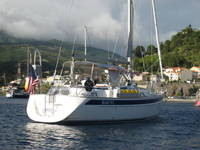
Who: Cunningham's (Captain: Kim; Crew: Maria & Daniel
Port: Norfolk, VA
Our Pictures