Our home is the world - with KOKOMO a Quasar 50 cruising catamaran around the world
18 June 2015 | Danao Dry Dock, Philippines
08 November 2014 | Danao, Philippines
17 January 2014 | Kolonia, Micronesia
15 January 2014 | Pohnpei
23 December 2013
22 December 2013 | Marshall Islands
11 December 2013 | Marjuro
01 December 2013 | Marshall Islands
20 October 2013 | Kiribati Islands
18 October 2013 | Pacific
10 October 2013 | Island group of Tuvalu
05 October 2013 | Tuvalu
22 September 2013 | American Samoa
19 September 2013 | Pago Pago
15 August 2013 | American Samoa
06 July 2013 | Sociaty Islands
05 July 2013 | Bora Bora
28 June 2013 | Tahiti, South Pacific
28 June 2013 | Tahiti
28 June 2013 | Tahiti
Fort San Lorenzo Rio Chagres
01 June 2010 | Panama

In the early days, there were two routes across Panama, leading from the Caribbean to the Pacific. The first by land (mule trails from Peru). The second, a route utilizing the Chagres River. The mouth of the river was protected by the Fort San Lorenzo and the Lajas Reef.
1671, Henry Morgan burned down the Fort and started with 2000 men their trip up the Chagres River in their fleet of canoas to assault Panama City
1671, Henry Morgan burned down the Fort and started with 2000 men their trip up the Chagres River in their fleet of canoas to assault Panama City
Comments
| Vessel Name: | Kokomo |
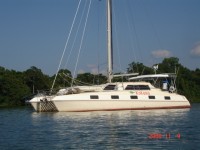
| Vessel Make/Model: | Prout, Quasar 50 catamaran |
| Hailing Port: | Meerbusch, Germany |
| Crew: | Peter and Donna |
| About: | The past is history. the future is mystery. Now is a gift. That's why we call it the present. |
| Extra: | If you like to contact us: Katkokomo@yahoo.com |
Gallery not available
Who: Peter and Donna
Port: Meerbusch, Germany
SailBlogs Friends


